Sunday, July 29, 2012

Jesus' Disciples - What Happened to Them?

The enigmatic disappearance of Jesus' Twelve (12) Disciples [from the New Testament] has been an ongoing mystery for many centuries and only a variety of ancient traditions is left for mankind to ponder upon. Little can be gleaned from the New Testament, but a few sources [such as Hippolytus and Eusebius of Rome] offer a peek into the fates of the 12 Apostles.

The New Testament only mentions the death of two disciples: Judas Iscariot (Matthew 27:1-5) and James [son of Zebedee] (Acts 12:1-2). The details of what happened to the other ten disciples are based upon the writings of the early Christian historians.

The Apostolic Lists of the Twelve Disciples:

Matthew 10:2-4

"Now the names of the twelve apostles are these; The first, Simon, who is called Peter, and Andrew his brother; James the son of Zebedee, and John his brother; Philip, and Bartholomew; Thomas, and Matthew the publican; James the son of Alphaeus, and Lebbaeus, whose surname was Thaddaeus; Simon the Canaanite, and Judas Iscariot, who also betrayed him." 

Mark 3:14-19

"And he ordained twelve, that they should be with him, and that he might send them forth to preach, And to have power to heal sicknesses, and to cast out devils: And Simon he surnamed Peter; And James the son of Zebedee, and John the brother of James; and he surnamed them Boanerges, which is, The sons of thunder: And Andrew, and Philip, and Bartholomew, and Matthew, and Thomas, and James the son of Alphaeus, and Thaddaeus, and Simon the Canaanite, And Judas Iscariot, which also betrayed him: "

Luke 6:13-16

"And when it was day, he called unto him his disciples: and of them he chose twelve, whom also he named apostles; Simon, (whom he also named Peter,) and Andrew his brother, James and John, Philip and Bartholomew, Matthew and Thomas, James the son of Alphaeus, and Simon called Zelotes, And Judas [Thaddeaus] the brother of James, and Judas Iscariot, which also was the traitor."

Acts 1:12-13

"Then returned they unto Jerusalem from the mount called Olivet, which is from Jerusalem a sabbath day's journey. And when they were come in, they went up into an upper room, where abode both Peter, and James, and John, and Andrew, Philip, and Thomas, Bartholomew, and Matthew, James the son of Alphaeus, and Simon Zelotes, and Judas [Thaddeaus] the brother of James." (Note: Judas Iscariot was dead and therefore not numbered among the Disciples in Luke's writing of the Acts.)
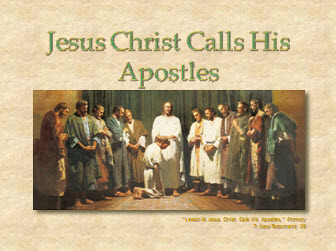


The Fates of the Disciples:


Andrew – Tradition teaches that Andrew was martyred in Greece. One account says he led the wife of a Roman governor to believe in Jesus. As a result, Andrew was killed. Some think he was crucified and continued to share the message of Jesus until the very end. For more information, visit Andrew and John, Disciples of John the Baptist

Bartholomew - also known as Nathanael, was flayed (skinned) alive and then beheaded according to the ancients. He spread the gospel of Jesus in India and Armenia (present day Armenia, eastern Turkey, northern Iraq, north western Iran). Some believe that present day Baku on the Caspian Sea may have been the location of his martyrdom. For more information, visit Bartholomew the Apostle

James, son of Alphaeus - also known as James the Lesser, was supposedly stoned to death and buried beside the temple in Jerusalem. Traditional legend claims that James was thrown down by the Pharisees, stoned and his brains dashed out with a fuller's club. For more information, visit James the Lesser

James, son of Zebedee - also known as James the Greater and the brother of John, was executed by Herod Agippa I shortly before the Passover around c/44 AD. (Acts 12:1-2) James' ministry was taught throughout Jerusalem and Judea. Some legends attribute his evangelistic endeavours led him to Spain, as well. For more information, visit James the Greater

John - was the brother of James and the son of Zebedee and one of the only disciples to experience a natural death around a conjectured date of c/100 AD. His teachings of Jesus took him throughout Jerusalem, Ephesus (present day Turkey) and most of Asia Minor. John was banished to the Isle of Patmos (a present day Greek island in the Aegean Sea) by either Emperor Nero [of Rome] or Domitian [of Patmos] and it was there that the Book of Revelation was revealed to him. For more information, visit John of Patmos

Judas Iscariot - According to Matthew 27:3-10 and Acts 1:18-19 [briefly described by Luke], Judas Iscariot killed himself not long after the betrayal of Jesus [to the Jewish authorities]. Some stories claim he hung himself and other tales state that he fell down a precipice in the valley of Hinnom, near Jerusalem and was dashed into pieces. The thirty pieces of silver (used in the betrayal) that was given to Judas was used to purchase a Potter's Field (burial ground) for foreigners and it was named the "Field of Blood" (even unto the present day). for more information, visit Judias Iscariot

Matthew - also known as Levi, preached the gospel in Judea and possibly Ethiopia and Persia. While not alot of information is available concerning Matthew, according to Eusebius he referenced Bishop Papias of Hierapolis (c/110 AD) as bearing witness to Matthew's authorship of his gospel. Hippolytus places his missionary work as being in Persia, Parthia and the general location of the Medes and was martyred at Parthia [near present day Tehran]. For more information, visit Matthew the Tax Collector

Philip - was instrumental in spreading the gospel of Jesus in Phrygia (located in present day Turkey). It is unclear how he actually died, but some sources say it was by stoning and others claim he was crucified [with his head down]. Either way his martyrdom took place at Heliopolis. For more information, visit Tomb of the Apostle Philip is found in Hierapolis.

Simon - who was later known as Peter, had a ministry that endured for over 30 years (according to tradition). Legend has it that he was martyred at Rome between 64-67 AD by crucifixion. All accounts of his death are agreed upon that Simon Peter [at his own request] was crucified with his head downward as he did not feel worthy to be put to death in the same manner as Jesus. Later traditions claim that St. Peter's in Rome was built over his grave. For more information, visit Simon Peter the Apostle

Simon the Zealot - also known as Simon the Canaanite, supposedly took his ministry north and preached in the British Isles (although this has not been proven). Not much is known about him other than he became the second Bishop of Jerusalem. Most believe that he was martyred too. For more information, visit Simon the Zealot

Thaddaeus - also known as Jude/Judas [who is also called Lebbaeus] preached to the people throughout Mesopotamia. Later he ministered in Assyria (present day eastern Iraq) and Persia (present day Iran) and his ministry joined forces with Simon the Zealot. It is believed that both disciples were killed at Berytus (present day Kara Kalisa in Iran) and buried there. For more information, visit Jude the Apostle

Thomas - Hippolytus records that Thomas [Didymus] was an active missionary and he met his fate in India by being speared to death. According to some, his gospel was spread throughout Parthia (present day Iraq and Iran) while other traditions link him with southern India as well. All traditions agree that he was killed by a lance or spear. For more information, visit The Doubting Thomas


Map - Traditional Locations Where the Disciples Preached and Died

Many readers of the New Testament find themselves wondering what happened to Jesus' Twelve Disciples, yet it remains a mystery unto this day. Speculation about the outcome and demise of these men may throw some light on the subject, but does not prove the ancient traditions of probability.

Such traditions also apply to the Apostle Paul [Saul of Taurus] who was converted to Christianity (after Jesus' resurrection) and preached the gospel [as far as Italy and Spain] for over 35 years during the time of Roman Emperor Nero and was said to have been beheaded in Rome and buried there. Matthias, who replaced Judas Iscariot, was later numbered along with the eleven remaining disciples. He was said to have preached in Jerusalem and was buried there. It is unknown how Matthias died.

Following the ascension of Jesus into heaven, His disciples went out and had tremendous impact on the world! They took the gospel of Jesus to far-off places and also left us the legacy of the New Testament. They used the training Jesus gave them to impact and encourage Christians in their faith. Yet, the question remains ... What really happened to them?   

Sunday, July 22, 2012

Ramadan: Holiest of Islamic Months

Origin of Ramadan

Many believe the word Ramadan is derived from the Arabic word "ramad", which means scorching. During pre-Islamic times, Ramadan was observed in Arabia as a month when the various tribes observed a truce from any existing hostilities. However, it wasn't until after the prophethood of Muhammad that Ramadan became associated with religious monotheism and perhaps is a reference to the idea that fasting will "scorch" away human sins. Such a belief has been observed [and practiced] ever since. Ramadan, as the name of the month, is of Islamic origin. Prior to Islam and the exclusion of intercalary days from the Islamic calendar, the name of the month was Natiq, which fell during the warm season.   This pre-Islamic period became commonly referred to as the Period of Ignorance.

However, when the Creator fulfilled His Covenant with Abraham to make Prophets of his lineage by choosing Muhammad, -- who was of the lineage of Ishmael (brother of Isaac) -- the period of Arabia's ignorance of the monotheism of the Children of Israel came to an end. Futhermore, Allah (God) proclaimed to Muhammad that fasting for His Sake was not a new innovation in monotheism, but rather an obligation practiced by those truly devoted to The Oneness of God. One such example of those whom observed fasting before Islam were the Jews who had migrated to Medinah awaiting the foretold Unlettered Prophet. This may or may not be referring to the Jewish practice of fasting on Yom Kippur. It is possible that the obligation to fast during Ramadan comes from early injunction to fast on Ashura, the 10th day of the month of Muharram, which may have once been identical with the Jewish observance of the Day of Atonement. Whether or not fasting on that day was obligatory, today it's still not uncommon for Muslims to fast that day voluntarily.

In the Quran

2:185 - "Ramadan is the month in which the Quran was revealed. Guidance for humanity, and clear portents of guidance, and the Criterion. Whoever of you witnesses the month, shall fast it. But whoever is sick, or on a journey, then a number of other days. Allah desires ease for you, and does not desire hardship for you, that you may complete the number, and celebrate Allah for having guided you, so that you may be thankful."

Thus, via the Quran, Muslims are informed that Muhammad first received revelations in the lunar month of Ramadan. Therefore, the month of Ramadan is considered to be the most sacred month of the lunar Islamic calendar, the recording of which began with the Hijra.

Beginning of Ramadan

Hilāl (the crescent) is typically a day (or more) after the astronomical new moon. Since the new moon indicates the beginning of the new month, Muslims can safely estimate the beginning of Ramadan. However, to many Muslims, this is not in accordance with authenticated Hadiths stating that visual confirmation per region is recommended. The consistent variations of a day have existed since the time of Muhammad.

A crescent moon seen over palm trees at sunset marking the beginning of the Islamic month of Ramadan in Bahrain.

Fasting During Ramadan

Ramadan is a time of spiritual reflection and worship. Muslims are expected to put more effort into following the teachings of Islam and to avoid obscene and irreligious sights and sounds. Sexual intercourse among spouses is allowed after one has ended the daily fast. During fasting, intercourse is prohibited as well as eating and drinking, and resistance of all temptations is encouraged. Purity of both thoughts and actions is important. The act of fasting is said to redirect the heart away from worldly activities, its purpose being to cleanse the soul and free it from harmful impurities. Ramadan also teaches Muslims to practice self-discipline, self-control, sacrifice, and empathy for those who are less fortunate; thus encouraging actions of generosity and charity. While fasting is not considered compulsory in childhood, many children endeavour to complete as many fasts as possible as practice for later life. Fasting is not necessary for women going through menstrual bleeding. Also, those traveling are exempt, but must make up the days they miss. Each day before dawn, a pre-fast meal called Suhoor is eaten. This meal is mentioned by the Sunnah, a sacred Muslim text. The meal typically consists of breakfast fare such as eggs and salads; little or no salt is used in preparation to avoid thirst during the upcoming fast.

End of Ramadan

The Muslim holiday of Eid ul-Fitr ("festivity of breaking the fast") marks the end of Ramadan and the beginning of the next lunar month called Shawwal in Arabic. This first day of the following month is declared after another crescent new moon has been sighted or the completion of 30 days of fasting if no visual sighting is possible due to weather conditions. This first day of Shawwal is called Eid ul-Fitr. Eid Ul-Fitr may also be a reference towards the festive nature of having endured the month of fasting successfully and returning to the more natural disposition (fitra) of being able to eat, drink and resume intimacy with spouses during the day. For the manner in which the Eid is celebrated, see Eid ul-Fitr and Salat al Eid.

File:Ramadan jerusalem kmhad.jpg
Ramadan in the Old City of Jerusalem

Ramadan, the ninth month of the lunar Islamic calendar,  lasts 29 or 30 days according to the visual sightings of the crescent moon according to numerous biographical accounts compiled in hadiths and basically is observed as one of the most holy of holidays in the Islamic religion.


Wednesday, July 4, 2012

Happy Independence Day, America!

On this day in 1776, the Declaration of Independence was approved by the Continental Congress, setting the 13 colonies on the road to freedom as a sovereign nation.  Variously known as the Fourth of July and Independence Day, July 4th has been a federal holiday in the United States since 1941, but the tradition of Independence Day celebrations goes back to the 18th century and the American Revolution (1775-83).


In June 1776, representatives of the 13 colonies then fighting in the revolutionary struggle weighed a resolution that would declare their independence from Great Britain. On July 2nd, the  Continental Congress voted in favor of independence, and two days later its delegates adopted the Declaration of Independence , a historic document drafted by Thomas Jefferson. The Constitution provides the legal and governmental framework for the United States, however, the Declaration, with its eloquent assertion "all Men are created equal," is equally beloved by the American people. Philadelphians marked the first anniversary of American independence with a spontaneous celebration, which is described in a letter by John Adams to Abigail Adams. From 1776 until the present day, July 4th has been celebrated as the birth of American independence, with typical festivities ranging from fireworks, parades and concerts to more casual family gatherings and barbecues.

For more information, please visit the following website:


WISHING ALL A GREAT AND BLESSED 4TH OF JULY


Sunday, July 1, 2012

Ten Lost Tribes of Israel

The Ten Lost Tribes of Israel refers to the ancient Israelites that formed the Kingdom of Israel and eventually 'disappeared' from Biblical and Talmudic history after the kingdom was destroyed by ancient Assyria around 720 BC. In order to better understand the story of the Lost Tribes, one must start at the beginning.

The Beginning

In approximately 1550 BC, Moses led an exodus of the Hebrews (later to become known as Israelites) from the land of Egypt and their oppressed captivity of 400 years (Genesis 15:13; Acts 7:6).  The Hebrews were descendants of Jacob's sons (Reuben, Simeon, Levi, Judah, Issachar, Zebulun, Dan, Naphtali, Gad, Asher, Joseph and Benjamin). Towards the end of the Exodus, Moses sent twelve spies to explore the land of Canaan (Numbers 13:1-16), including Joshua who was Moses' faithful apprentice.  

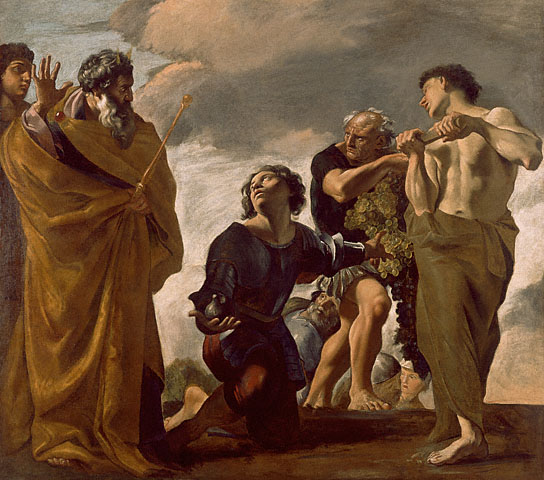
File:Lanfranco Moses and the Messengers from Canaan.jpg
  Moses and the Messengers from Canaan, by Giovanni Lanfranco

After the death of Moses, Joshua led the Israelite tribes in the conquest of Canaan and thusly allocated the land to the tribes. The 12 tribes consisted of Reuben, Simeon, Judah, Issachar, Zebulun, Dan, Naphtali, Gad, Asher, Benjamin and the two sons of Joseph (Ephraim and Manasseh). The tribe of Levi became the Priesthood and intermingled with all tribes. The 12 tribes of Israel remained one united kingdom until sometime during the late Bronze Age (c/930 BC). 

The Dispersion

When the Northern tribes rejected Solomon's son, Rehoboam, as their king in the United Monarchy after the death of King Solomon, they separated themselves from the Southern tribes and made Jeroboam their king and kept the title "Kingdom of Israel". The Southern tribes became known as the "Kingdom of Judah". The ten Northern tribes consisted of Reuben, possibly Simeon (a small portion given), Issachar, Zebulun, Dan, Naphtali, Gad, Asher, Ephraim and Manasseh. The Southern tribes remained loyal to Rehoboam and consisted of the tribes of Judah and Benjamin. In addition, some of the members of the tribe of Levi, who had no land allocation, stayed in the Northern kingdom; however, the members of the Priesthood [of Levi's tribe] remained in the Southern kingdom, thusly continuing Levi's heritage of intermingling with both kingdoms. Some scholars believe that the tribe of Simeon was alotted a small portion of land in the Kingdom of Judah, as well, and did not receive their own land due to their deceit and cruelty at Shechem (Genesis 49:5-7; Joshua 13:33).


The Lost Tribes

As soon as Jeroboam became king of Israel (Northern Kingdom), he introduced idol-worship to the nation and rejected the holy days commanded by God. Pagan living became common with the former House of David. This wicked practice continued for many generations in spite of God pleading with the kingdom through his prophets [such as Isaiah and Ezekiel].  Dynasties changed rapidly, instability reigned in the land and entire families of previous rulers were murdered so that no royal line remained. This became the norm for the kingdom of Israel. When the Israelites refused to succumb to the warning of their Creator, a promise to "root up Israel out of this good land and be scattered over the face of the Earth" was made. (1 Kings 14:15). The warning was ignored. In c/732 BC the Assyrian king, Tiglath-Pileser III, invaded Damascus and Israel and annexed the territory of the tribes of Reuben, Gad and Manasseh in Gilead; he also captured the territory of Naphtali and the city of Janoah in Ephraim.  This resulted in their captivity. Israel continued to exist within a reduced territory as an independent kingdom subject to Assyria until about 720 BC when the remaining settlements were invaded and the remainder of the tribes were deported into captivity. The promise of the Israelite God was kept and the population of Israel (Northern Kingdom) was exiled as prophesied by Isaiah.    

The Conclusion

There are many theories revolving around the mysterious disappearance of the Ten Lost Tribes. Some traditions claim the ancient kingdom of Israel continues their hidden existence in our modern society and will one day make a public return.

Ezekiel 37:22 states - "And I will make them one nation in the land upon the mountains of Israel; and one king shall be king to them all: and they shall be no more two nations, neither shall they be divided into two kingdoms any more."

Other sources believe the tribes lost their identity [for eternity], but did not wholly disappear. This theory is based upon the deported communities being mentioned as still existing at the time of the composition of the books of Kings and Chronicles in the Tanakh/Old Testament.   

Mishnah in Sanhedrin (110b) states: "The Ten Tribes will not return as it says (Nitzovim 29:8) And he threw them to a different land like this day." According to the words of Rabbi Akivah, "Just as a day passes and will never return, they too will be exiled never to return."
 
While there is a vast amount of literature on the Ten Lost Tribes of Israel - a subject based upon written religious tradition and partially upon speculation - there is no specific source that can be relied upon for a complete answer.

Sunday, June 24, 2012

Melchizedek: The Mystery Man

Melchizedek  was  a  man of mystery from the Hebrew 
Bible (Old Testament) in  which  he  made  only  one (1) physical appearance and a handful of honorable mentions throughout the entire Christian Bible. There is  no  mention  of  the  name  Melchizedek in the Qur'an or ancient Islamic literature, although some scholars such as, Abdullah Yusuf Ali, suggest a link between Melchizedek and Khidr (a revered figure in Islam, whom the Qur'an describes as a righteous servant of Allah). Buddhism rejects the idealism of Melchizedek because such a theory presents a nonritualistic concept  that does not parallel  the dogma, traditions, and teachings of the Brahman priesthood. With the passing of the centuries in India, the populace of the Hindu [religion]  returned in measure to the ancient rituals of the Vedas as they had been modified by the teachings of the Melchizedek missionaries (aka: Salem missionairies, who preached the one God of Melchizedek, the Most High of heaven) and crystallized by the later Brahman priesthood.

The Short Story of Melchizedek:

According to the Tanakh (Hebrew Bible) and the Old Testament of the Christian Bible, Melchizedek made a brief appearance to Abram (Abraham) after his victory at the Battle of the Vale of Siddim in which Abram rescued his nephew, Lot, and his family, from the abduction during the rebellion of the Jordan River cities against Elam during the early to mid-Bronze Age  era. Melchizedek is listed as being the King of Salem (later to become Jerusalem), in the land of Mesopotamia, who annoints and blesses Abram:

Genesis 14:16-23:

16 And he brought back all the goods, and also brought again his brother Lot, and his goods, and the women also, and the people. 17 And the king of Sodom went out to meet him after his return from the slaughter of Chedorlaomer, and of the kings that were with him, at the valley of Shaveh, which is the king's dale. 18 And Melchizedek king of Salem brought forth bread and wine: and he was the priest of the most high God. 19 And he blessed him, and said, Blessed be Abram of the most high God, possessor of heaven and earth: 20 And blessed be the most high God, which hath delivered thine enemies into thy hand. And he gave him tithes of all. 21 And the king of Sodom said unto Abram, Give me the persons, and take the goods to thyself. 22 And Abram said to the king of Sodom, I have lift up mine hand unto the Lord, the most high God, the possessor of heaven and earth, 23 That I will not take from a thread even to a shoelatchet, and that I will not take any thing that is thine, lest thou shouldest say, I have made Abram rich:" 

Interpretations of Who Melchizedek Was:

Although Melchizedek is the first person in the Torah  to be titled a Kohen (priest), the Midrash records that he was preceded in priesthood by Adam (the first historical man). The Rabbis taught that Melchizedek acted as a priest and handed down Adam's robes to Abram. (Numbers Rabbah 4:8) The Rabbinic commentaries to the Torah explain that Melchizedek was essentially Shem, son of Noah, who was given the priesthood by his father's blessing. The Babylonian Talmud, presents the name Melchizedek (מלכי־צדק) as a nickname title for Shem.

According to 11Q13 of the Dead Sea Scrolls, Melchizedek is seen as a divine being and Hebrew titles as Elohim are applied to him. He will proclaim the "Day of Atonement" and he will atone for the people who are predestined to him. Melchizedek also will judge the nations.    

The Second Book of Enoch tells how Melchizedek was born of a virgin, Sofonim, the wife of Nir, a brother of Noah. The child came out from his mother after she had died already physically developed, clothed, speaking and blessing God, and marked with the badge of priesthood. Forty days later, he was taken by the archangel, Gabriel to the Garden of Eden and was thus preserved from the Great Flood without having to be in Noah's Ark.

The ancient historian, Josephus refers to Melchizedek as a "Canaanite chief" in War of the Jews, but as a priest in Antiquities of the Jews.

In Christianity, the only New Testament reference to Melchizedek appears in the Letter to the Hebrews in Chapters 5, 6 and 7 (composed by the Apostle Paul) which was most likely based on the passage found in the Book of Psalms (110:4), where King David describes the future Messiah as "a priest forever in the order of Melchizedek". Abram's transfer of goods (or tithes) to Melchizedek is seen to imply that he was superior to Abram. Melchizedek was the king of Salem, which means "peace", therefore making him the "King of Peace";  the Hebrew name of  Melchizedek itself means  "King of Righteousness".   In reference to the Holy Priest of Salem, Hebrew 7:3 states: "Without father, without mother, without descent, having neither beginning of days, nor end of life; but made like unto the Son of God; abideth a priest continually". Jesus Christ assumed the role of High Priest after his resurrection. When Jesus appeared to Mary Magdalene after he had been resurrected and commanded her to tell his Disciples, they did not believe her. When Jesus appeared to the 11 apostles, they did not recognize him [Jesus could have possibly had the appearence of the man who blessed and annointed Abram]. However, the Disciples soon learned this strange man standing before them, whom they did not recognize, was indeed their Lord and Savior. Not only by the authoritative words Jesus spoke as a commandment, but the miraculous ascension into Heaven the 11 men witnessed.   With these titles and similar descriptions all being associated with the person known as  Jesus of Nazareth, Christians proclaim that Mechizedek and Jesus are one in the same.   

Who Was Melchizedek?
 
Biblical scripture does not elaborate on the identity of Melchizedek, King of Salem; nor does the concealed reason for his brief presence of blessing Abram, which only extended two verses (Genesis 14:18-19), offer a proper explanation. Although a man of mystery, he was not forgotten when King David [of the B.C. era] wrote a Psalm in reference to him 900 years later (Psalms 110:4); and once more remembered when the Apostle Paul included several references to Melchizedek in the epistle to the Hebrews (5, 6, 7) in the 1st century A.D.  Few mysteries of the Hebrew and Christian Bibles have attracted more interest than the enigmatic identity of Melchizedek. 

"Now consider how great this man was, unto whom even the patriarch Abraham gave the tenth of the spoils" - Hebrews 7:4 


Sunday, June 17, 2012

HAPPY FATHER'S DAY!

Historically, fatherhood was born with our common ancestor, Adam [of Eden] who was the pre-Flood “father” of a great nation that endured for over 2,000 years. In the days of Moses, long after the Great Flood, when enumerating the households of the Hebrews (in the Book of Numbers) they [the people] were counted according to the 'house of their fathers'. 

Numbers 33:54 -
“And ye shall divide the land by lot for an inheritance among your families: and to the more ye shall give the more inheritance, and to the fewer ye shall give the less inheritance: every man's inheritance shall be in the place where his lot falleth; according to the tribes of your fathers ye shall inherit.”

The 5th Commandment:

"And he [Moses] wrote on the tablets, according to the first writing [of God], the ten commandments, which the Lord spake unto you in the mount out of the midst of the fire in the day of the assembly: and the Lord gave them unto me. "Honour thy father and thy mother: that thy days may be long upon the land which the Lord thy God giveth thee." - Exodus 20:12

~ * ~ * ~ * ~ * ~ * ~ * ~ * ~ * ~ * ~ * ~ * ~   

The Jewish custom of honoring the "father" is based on the fifth of the Ten Commandments (Exodus 20:12 & Deuteronomy 5:16). The ancient Rabbinic writings of the Talmud (a collection of Jewish laws and traditions) stresses the importance of honoring parents; the sages wrote that when mankind honors his father (and mother), it is considered as though he is honoring God, who was a partner with our parents in our creation.  

"My son, despise not the chastening of the Lord; neither be weary of his correction: For whom the Lord loveth he correcteth; even as a father the son in whom he delighteth." - Proverbs 3:11-12

"Everything that your father says to you, you are obliged to obey. But if he says to you: “Let us bow down to idols,” you must not obey him, lest you become an apostate." - Midrash, Yalkut Shimoni, Proverbs 960  

"I am the Lord your God, and both you and your parents are equally bound to honor Me, therefore, you must not hearken to them to disregard My word." - Kitzur Shulchan Aruch 143:15

~ * ~ * ~ * ~ * ~ * ~ * ~ * ~ * ~ * ~ * ~ * ~

In Christianity, one of the greatest "father" stories is about a priest [from the sons of Aaron] named Zecharias; husband of Elisabeth and the father of John the Baptist. Christians, as well as Muslims, believe him to be a prophet of great esteem.  The story is as follows from the New Testament:  

The Announcement of Receiving a Child: Luke 1:12-22 -

12) And when Zacharias saw him, he was troubled, and fear fell upon him. 13) But the angel said unto him, Fear not, Zacharias: for thy prayer is heard; and thy wife Elisabeth shall bear thee a son, and thou shalt call his name John. 14) And thou shalt have joy and gladness; and many shall rejoice at his birth. 15) For he shall be great in the sight of the Lord, and shall drink neither wine nor strong drink; and he shall be filled with the Holy Ghost, even from his mother's womb. 16) And many of the children of Israel shall he turn to the Lord their God. 17) And he shall go before him in the spirit and power of Elias, to turn the hearts of the fathers to the children, and the disobedient to the wisdom of the just; to make ready a people prepared for the Lord. 18) And Zacharias said unto the angel, Whereby shall I know this? for I am an old man, and my wife well stricken in years. 19) And the angel answering said unto him, I am Gabriel, that stand in the presence of God; and am sent to speak unto thee, and to shew thee these glad tidings. 20) And, behold, thou shalt be dumb, and not able to speak, until the day that these things shall be performed, because thou believest not my words, which shall be fulfilled in their season. 21) And the people waited for Zacharias, and marvelled that he tarried so long in the temple. 22) And when he came out, he could not speak unto them: and they perceived that he had seen a vision in the temple: for he beckoned unto them, and remained speechless.

The Birth of John the Baptist: Luke 1:57-66 - 

57) When it was time for Elizabeth to have her baby, she gave birth to a son. 58) Her neighbors and relatives heard that the Lord had shown her great mercy, and they shared her joy. 59) On the eighth day they came to circumcise the child, and they were going to name him after his father Zecharias, 60) but his mother spoke up and said, “No! He is to be called John.” 61) They said to her, “There is no one among your relatives who has that name.” 62) Then they made signs to his father, to find out what he would like to name the child. 63) He asked for a writing tablet, and to everyone’s astonishment he wrote, “His name is John.” 64) Immediately his mouth was opened and his tongue set free, and he began to speak, praising God. 65) All the neighbors were filled with awe, and throughout the hill country of Judea people were talking about all these things. 66) Everyone who heard this wondered about it, asking, “What then is this child going to be?” For the Lord’s hand was with him.

~ * ~ * ~ * ~ * ~ * ~ * ~ * ~ * ~ * ~ * ~ * 

Clearly outlined by Islam, “fatherhood” is one of various responsibilities, including being a guide in Life to lead and seek infinite happiness in the hereafter. As the Head of the family, the father ensures the family members are eluded from the fires of Hell and strives to have peace and prosperity in Life; free from concerns and anxiety that can damage the heart and mind.

“And Allah has made for you wives of your own kind, and has made for you, from your wives, sons and grandsons, and has bestowed on you good provision".
 - Quran 16:72

The Prophet Muhammad said: “The man is a guardian of his family, the woman is a guardian and is responsible for her husband’s house and his offspring; and so all of you are guardians and are responsible for your subjects."


~ * ~ * ~ * ~ * ~ * ~ * ~ * ~ * ~ * ~ * ~ * ~

While Buddhism teaches the importance of respecting one’s "father", the founder of this religion, Siddhārtha Gautama [Buddha], renounced his own father and family in search of enlightenment. What Buddha discovered on his journey of knowledge, besides the lesson of his ambivalent relationship with his own father and son, was the bonds between parents and children were fundamental to the social order of Life.


Buddha taught: “There are five ways in which a son should minister to his father and mother… he should think: having been supported by them, I will support them. I will perform their duties for them I will keep up the family tradition. I will be worthy of my heritage. After my parents deaths, I will distribute gifts on their behalf”

~ * ~ * ~ * ~ * ~ * ~ * ~ * ~ * ~ * ~ * ~ * ~

Scriptural passages from Hindu texts, such as the Veda (composed between 1400 to 400 BC), glorify responsible family life as the backbone of society; the basic building block of Hindu society is the extended family, which usually consists of three or more generations living together. The "fathers" provide a pooled income, , as well as make the majority of important decisions based on their own Life experiences, which is used as a guidance tool for the younger members.

"God! Give us wisdom as a father gives to his sons. Guide us, O Much-invoked, in this path. May we live in light." - Veda 7.32.26   

~ * ~ * ~ * ~ * ~ * ~ * ~ * ~ * ~ * ~ * ~ * ~

The greatest "Father" of mankind is known by many names (such as: God & Yahweh) and is revered above all else. While the Muslims do not believe that Allah is the "Father", the other major religions do believe the Creator is "Father" to ALL.

Christianity: “Our Father who art in heaven, hallowed be thy name.” – Matthew 6:9

Judaism: “ Wherefore David blessed the Lord before all the congregation: and David said, Blessed be thou, Lord God of Israel our father, for ever and ever.”
– 1 Chronicles 29:10

Buddhism: “I tell you, Shariputra, I, too, am like this, Being the Most Venerable among many saints, The Father of the World....I tell you, Shariputra,You men are all my children, and I am your Father. For age upon age, you have been scorched by multitudinous woes, and I have saved you all.” - Lotus Sutra 3

Hinduism: “The Great Principle, the Divine, is my womb; I cast the seed into it; there is the origin of all creatures.Whatever forms originate in any wombs the real womb is the Divine, the Great Principle. I am the Father that gives the seed.”
- Bhagavad Gita 14.4

Depending on the historical and cultural experience, there have been many variations in the roles of being a "father" [from educator to guardian]. In analyzing the various customs of fatherhood, one might be led to believe that respect for the father is a function of religious traditionalism and a great respect for the greatest "Father" of All mankind.