Saturday, June 2, 2018

Genesis: The Mysterious Beginning (Part 3)

The brief description of the various Genesis stories continues...

> Esau Finds a Wife (Gen. 26)       


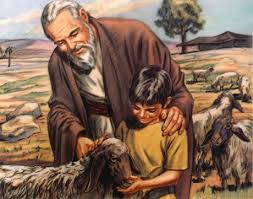
Related imageThis is one of the briefest stories in the Book of Genesis. Two verses (26:34-35) enlighten that Esau married a woman named Judith, much to the dismay of his parents, Isaac and Rebekkah. Not much else is known about these nuptials other than Esau was 40 years old and Judith was the daughter of Beeri the Hittite and Bashemath (daughter of Elon the Hittite). Marrying outside the family tribe was disheartening to Esau's parents, but whether Isaac and Rebekkah ever accepted the union is still unknown.

> Isaac and the Blessing Deception (Gen. 27)
Many years pass and the continuing saga finds Isaac an old man who has now gone blind (27:1). The patriarch of the family called his eldest son, Esau, into his tent and asked him to go hunt venison, make him a tasty stew and bring it to him so that he could pass a blessing to him as he feared his days on Earth were numbered (27:4). His wife overheard the conversation and quickly called for her youngest son, Jacob. Rebekkah instructed Jacob to kill two goat kids so she could make a savory meal for his father, Isaac. (27:9). The deception began when Jacob did not argue with his mother, but pointed out the fact that he [Jacob] was a smooth man and his brother [Esau] was a hairy man (27:11). Rebekkah told Jacob not to worry. "And Rebekah took goodly raiment of her eldest son Esau, which were with her in the house, and put them upon Jacob her younger son: And she put the skins of the kids of the goats upon his hands, and upon the smooth of his neck:" (27:15-16). While Isaac was at first hesitate and confused when Jacob came to him in disguise, for he thought it was Jacob's voice that spoke to him, he relinquished his thoughts when he felt his son's 'hairy hands and neck' (27:22). The deception worked and Jacob was given the blessing of his father. It is not recorded how Isaac reacted when he learned the truth, but when Esau discovered what his brother had done, he begged his father to give him a blessing too (27:34); Isaac sadly informed his eldest son that he could not undo the blessing that was presented to Jacob. Esau was so angry that he threatened to kill Jacob (27:41), so Rebekkah sent Jacob away to the home of her brother, Laban, and instructed him to stay put until his brother's fury dissipated (27:45). The deception continued when Rebekkah told her husband, "I am weary of my life because of the daughters of Heth: if Jacob take a wife of the daughters of Heth, such as these which are of the daughters of the land, what good shall my life do me?" Isaac agreed to send Jacob to Laban to take a wife from his uncle's family.

> Esau Takes Another Wife (Gen. 28)
After Isaac agreed to send Jacob to Laban's household and Esau being told that his father did not approve of the women of Canaan (28:8), Esau decided to take a wife from the tribe of Abraham's oldest son, Ishmael. He married Mahalath, who was the daughter of Ishmael (28:9).  Why this short story was incorporated in scripture is somewhat daunting. Whether this marital union was accepted by Isaac and Rebekkah remains unknown. However, we learn that polygamy is introduced into scripture again.

> Jacob's Ladder (Gen. 28)
Verses 10-22 produces the story of Jacob falling asleep and having a dream in which he saw a ladder that was climbing into Heaven, and many angels were seen ascending and descending it (28:12). Jacob was amazed and somewhat wary when the voice of the Lord called out to him, "I am the Lord God of Abraham thy father, and the God of Isaac: the land whereon thou liest, to thee will I give it, and to thy seed;" (28:13). God went on to reiterate the promise He had made to Abraham to make his descendants many great nations. Upon waking, Jacob was overwhelmed by such a dream and quickly made a pillar from the stones his head had been resting upon (28:18).  Jacob called this holy place Bethel (28:19) and vowed, "If God will be with me, and will keep me in this way that I go, and will give me bread to eat, and raiment to put on, So that I come again to my father's house in peace; then shall the Lord be my God:" (28:20-21).

> Jacob, Rachel and Leah (Gen. 29)
This is another tale of deception and heartache. Not long after his strange dream, Jacob reaches the land of his mother's brother, Laban. There he finds the men out in the field rounding up the sheep for watering (29:8). Then he sees her... coming with her father's sheep to the well of water (29:10) and was instantly smitten by her beauty. Laban hears of his nephew's arrival and quickly comes to meet him. "And Laban said unto Jacob, Because thou art my brother, shouldest thou therefore serve me for nought? tell me, what shall thy wages be?" (29:15). Jacob insisted that he would work seven years for Laban in exchange for Rachel's hand in marriage (29:18). When the seven years were up, Laban held a grand feast and later sent his oldest daughter (Leah) to Jacob instead of Rachel (29:23). Isaac's son was not too happy with these turn of events when he discovered his father-in-law's subterfuge, but Laban informed him that it was their custom to marry off the oldest before the youngest (29:26), but made a promise to Jacob he could wed Rachel also if he fulfilled his matrimonial duties for one week with Leah and work another seven years for his father-in-law (29:27). Jacob agreed. Polygamy is again mentioned in the Bible. Both daughters of Laban were awarded each a handmaid - Zilpah and Bilhah. The Lord noted that Jacob loved Rachel more than Leah and closed up Rachel's womb (29:31). Leah bare four sons to Jacob - Rueben, Simeon, Levi and Judah - and then became temporarily barren, too.

> Jacob and the Handmaids (Gen. 30)
When Rachel saw that her sister was producing sons for their shared husband, the younger sibling became envious (30:1). Rachel pleaded with Jacob to take her handmaid (Bilhah) as a surrogate to produce children unto her husband on her behalf (30:3). Bilhah conceived two children and they were named Dan and Naphtali. "When Leah saw that she had left bearing, she took Zilpah her maid, and gave her Jacob to wife." (30:9). Zilpah produced two more sons - Gad and Asher- on Leah's behalf. Eventually a squabble occurred between the sisters and the race for more kids was enacted (30:14-16). Leah evidently won the quarrel as she bore Jacob two more sons - Issachar and Zebulun - as well as a daughter - Dinah. Rachel remained barren until, "God remembered Rachel, and God hearkened to her, and opened her womb." (30:22). Rachel gave birth to Joseph and another child [Benjamin], Jacob's youngest son (30:23-24). All of Jacob's sons would comprise the Twelve Tribes of Israel.

> Jacob's Agreement and Covenant with Laban (Gen. 30-31)
When Jacob felt it was time to leave his father-in-law's land and journey home, Laban began scheming on how to keep the man in his land because Jacob had made him rich and prosperous (30:27). Laban pleaded with Jacob to stay a while longer, to which Jacob agreed to if he could have his choice of livestock. (30:31-33). "And Laban said, “Oh, that it were according to your word!” So he removed that day the male goats that were speckled and spotted, all the female goats that were speckled and spotted, every one that had some white in it, and all the brown ones among the lambs, and gave them into the hand of his sons." (30:34-35). However, this ploy did not deter Jacob. He concocted a method of working with the livestock Laban had left him, to which Jacob separated the good stock [which he kept] from the weak [which he put aside for Laban]. The method he used included rods he made from green poplar, almond and chestnut trees (30:37). God blessed Jacob with many prime stock animals, as well as servants, camels and donkeys. (30:43). The story escalates when Laban's sons accuse Jacob of stealing from their father. It's at this point that God comes to Jacob and tells him, "Return to the land of your fathers and to your family, and I will be with you." (31:3). Jacob consulted with his wives and explained a dream in which the angel of God showed him how Laban was using him. Leah and Rachel, who understood, agreed with their husband (31:14-16). So Jacob and his household  "fled with all that he had. He arose and crossed the river, and headed toward the mountains of Gilead." (31:21). Laban was furious when he discovered Jacob left and pursued him (31:22). When God came to Laban in a dream and told him to watch what he says to Jacob, it is unclear if Laban was frightened because he continued to follow after his son-in-law. When Laban caught up with Jacob, he accused him of stealing [his gods] from him. (31:30). Jacob had no idea that Rachel had taken the gods from her father's house and encouraged Laban to search for them. Rachel concealed the idols and Laban was none the wiser (31:35). Now it was Jacob's turn to get angry, reminding him that he had served his father-in-law for 20 years and it was now time for him to leave in peace. "Unless the God of my father, the God of Abraham and the Fear of Isaac, had been with me, surely now you would have sent me away empty-handed. God has seen my affliction and the labor of my hands, and rebuked you last night.” (31:42). This declaration finally got through to Laban and they made a covenant with one another not to bring hardship upon the each other in the future. "And early in the morning Laban arose, and kissed his sons and daughters and blessed them. Then Laban departed and returned to his place." (31:55).  It is not recorded if Jacob ever found out about Rachel hiding "the gods" from her father or what ever became of the idols that Laban had accused Jacob of stealing.

> Jacob Sends a Gift to His Brother (Gen.32)
A new story emerges in which Jacob nears the land of his brother, Esau, and sends word that he would like to see him and comes baring gifts. (32:3-5). The messengers return to inform Jacob that Esau received the message and was, in turn, coming to meet him with an army of 400 men (32:6). Of course, Jacob had no idea what his brother's intentions were and divided his household into two units, therefore saving a remnant of his household should one or the other units be killed by Esau. Jacob called upon the Lord and entreated Him to watch over his house (32:9-12), then instructed his servants to go ahead of him so they could present Esau with the gifts of livestock and servants. "In this manner you shall speak to Esau when you find him; and also say, ‘Behold, your servant Jacob is behind us.’" For he said, “I will appease him with the present that goes before me, and afterward I will see his face; perhaps he will accept me.” (32:9-20). At this point in the saga of Jacob, the story abruptly ends on a cliffhanger!

> Jacob Wrestles with God (Gen 32)
Evidently Jacob was somewhat wary of his brother's imminent arrival and moved his family across the ford of Jabbok, making sure all crossed safely until he was the last one on the opposite side of the waterway (32:22-24). The story goes on to relate how Jacob wrestled with a 'man' until the breaking of day. When the stranger noted that Jacob did not prevail against him, he touched the socket of his hip; and the socket of Jacob's hip, which was out of place from wrestling with this man throughout the night (32:25). When the sun began to come up, the man told Jacob to let him go, to which Jacob replied, "I will not let You go unless You bless me!" The mysterious man asked the son of Isaac what his name was and then announced [when Jacob enlightened of his name], "Your name shall no longer be called Jacob, but Israel; for you have struggled with God and with men, and have prevailed." (32:28). However, when Israel (Jacob) asked the man his name it was not forthcoming (32:29). "So Jacob called the name of the place Penuel:“For I have seen God face to face, and my life is preserved.” (32:30).

> Jacob and Esau Meet (Gen. 33)
This is the continuing tale of Jacob/Israel that ended on a cliffhanger earlier in the saga. This story is about two brothers reuniting after a 20 year absence, as well as 20 year spat. Jacob remained cautious as he saw his brother drawing near. "And he put the maidservants and their children in front, Leah and her children behind, and Rachel and Joseph last." (33:2). However, Esau was thrilled to see his brother and surprised Jacob by embracing him instead. When Jacob tried to give the many gifts of livestock and servants to Esau, his brother jovially told him, “I have enough, my brother; keep what you have for yourself.” But Jacob [Israel] insisted on bestowing this blessing upon his brother and Esau finally accepted. (33:10-11). When Esau invited Jacob and his family to his house, Jacob said they would follow at a slower pace so as not to push the weak children and the nursing animals beyond their limits (33:13-14). The story ends with Esau agreeing to his brother's plan and Jacob setting up house at a place called Succoth (33:17).

> Dinah, Shechem and Her Brothers (Gen 34)
A tale of love and woe is incorporated into this story. Dinah, who is Jacob's only daughter mentioned by name in the Bible, decided to one day go into the city to see what other women looked like in the land (34:1). A prince notices her and she catches his fancy. "And when Shechem the son of Hamor the Hivite, prince of the country, saw her, he took her and lay with her, and violated her." (34:2). When the young man asked his father to make it possible for him to marry Dinah, Shechem's father went to talk to Jacob about the matter. This news troubled Jacob exceedingly and while Hamor the Hivite was talking to Israel, Dinah's brothers came in from the fields and heard the conversation, which made them angry (34:7). Even though a pact was made with the house of Hamor to circumcise their males in order to allow a marriage to occur between the tribes (34:22), two of Dinah's brothers - Simeon and Levi - did not agree and, in retribution, killed all the male scions in the city (34:25). Jacob was quite disappointed in his sons' rebel actions, "Then Jacob said to Simeon and Levi, “You have troubled me by making me obnoxious among the inhabitants of the land, among the Canaanites and the Perizzites; and since I am few in number, they will gather themselves together against me and kill me. I shall be destroyed, my household and I.” But they said, “Should he treat our sister like a harlot?” (34:30-31). How Jacob reacted to their declaration remains unknown as this is another story that comes to an abrupt end.

> Jacob Returns to Bethel (Gen. 35)
Not long after the Dinah incident, the Creator came to Jacob and said, "Arise, go up to Bethel and dwell there; and make an altar there to God, who appeared to you when you fled from the face of Esau your brother." (35:1). So Jacob uprooted his family and moved back to Bethel (the place where Jacob's dream about the ladder occurred). The patriarch of the family ordered the tribe to "Put away the foreign gods that are among you, purify yourselves, and change your garments." (35:2). Israel hid the foreign gods under the terebinth tree which was by [the city of] Shechem (35:4). Evidently the Lord caused a distraction to aid Jacob in escaping the land, as it is recorded, "And they journeyed, and the terror of God was upon the cities that were all around them, and they did not pursue the sons of Jacob." (35:5). However, the sudden announcement that Rebekkah's nurse (Deborah) dies and is buried in Bethel under the terebinth tree comes out of nowhere! (35:8). First time the woman is mentioned up until this point, so why include her extremely brief mention? Regardless, God reiterates Jacob's name change to Israel, then added, "The land which I gave Abraham and Isaac I give to you; and to your descendants after you I give this land.” (35:12). "So Jacob set up a pillar in the place where He talked with him, a pillar of stone; and he poured a drink offering on it, and he poured oil on it." (35:14).

> The Death of Rachel (Gen. 35)
Here is the brief story of Rachel's death as recorded in the Bible. The family once more uprooted and journeyed from Bethel towards Ephrath (today known as Bethlehem) where Rachel went into labor with Jacob's 12th child, Benjamin (35:16). Unfortunately, Rachel died in childbirth (35:18) and was buried on the way to Ephrath (35:19). "And Jacob set a pillar on her grave, which is the pillar of Rachel’s grave to this day." (35:20). Jacob's clan continued their journey after this and pitched their tents beyond the tower of Eder. How odd this story should end with Jacob finding out his son, Reuben, had sexual relations with his father's concubine, Bilhah (35:22). What a bizarre way to end a sad story!

> The Death of Isaac (Gen. 35)
This story comes straight to the point. It is told that Jacob/Israel came to his ailing father, Isaac, who was living at Mamre (later known as Hebron). Jacob evidently resided with his father until his death at 180 years. It is recorded, "So Isaac breathed his last and died, and was gathered to his people, being old and full of days. And his sons Esau and Jacob buried him." (35:29). End of story.

> Genealogy of Esau (36)

The following chapter is not so much a story, but a genealogy of Isaac's firstborn son, Esau, with snippets of information thrown in between the names of Esau's clan. "Esau took his wives from the daughters of Canaan: Adah the daughter of Elon the Hittite; Aholibamah the daughter of Anah, the daughter of Zibeon the Hivite; and Basemath, Ishmael’s daughter, sister of Nebajoth." (36:2-3). "Then Esau took his wives, his sons, his daughters, and all the persons of his household, his cattle and all his animals, and all his goods which he had gained in the land of Canaan, and went to a country away from the presence of his brother Jacob. For their possessions were too great for them to dwell together, and the land where they were strangers could not support them because of their livestock. So Esau dwelt in Mount Seir. Esau is Edom. (36:6-8). Esau had a total of five sons: Eliphaz (by Adah); Jeush, Jaalam and Korah (by Aholibamah); and, Reuel (by Basemath). From these five sons of Esau the mighty kingdom of Edom would be born.

> Introduction of Joseph (Gen. 37)
A new story develops about Jacob's 11th son, Joseph. It's recorded when he was seventeen years old Joseph was feeding the flock with some of his brothers (who were the sons of Bilhah and Zilpah) and brought a bad report of them to Jacob (37:2). What the 'bad report' was is not entirely clear, but it was said his brothers "hated him and could not speak peaceably to him." (37:4) because, "Israel loved Joseph more than all his children, because he was the son of his old age. Also he made him a tunic of many colors." (37:3). Not a good way to start off an introduction to a story!

> Joseph and His Prophetic Dreams (Gen. 37)
The saga of Joseph begins with two separate dreams he enlightened his father and his brothers about. The first vision: "There we were, binding sheaves in the field. Then behold, my sheaf arose and also stood upright; and indeed your sheaves stood all around and bowed down to my sheaf." (37:7). The second vision: "Then he dreamed still another dream and told it to his brothers, and said, “Look, I have dreamed another dream. And this time, the sun, the moon, and the eleven stars bowed down to me." (37:9). Both dreams were similar and caused more discontent among the brothers. While Jacob rebuked his son for sharing such a dream with the family, although he secretly mused upon what Joseph had said (37:11), the dreams only caused more tension between Joseph and his brothers. 

> Joseph Sold By His Brothers (37)  
When Jacob sent Joseph to check on his brothers, whom were keeping watch over the flock in Shechem, he would not know it would be the last time he would see him [for many years to come]. Israel had told him, "Please go and see if it is well with your brothers and well with the flocks, and bring back word to me." So he sent him out of the Valley of Hebron, and he went to Shechem." (37:14). On his journey to Shechem, a man stopped and asked what Joseph was seeking, unto which he replied, "I am seeking my brothers." (37:16). The unnamed man led him in the correct direction (37:17), then completely vanished from the story. As Joseph neared the site where his brethen were tending the flock, his brothers began conspiring how to kill him, except for Reuben. "And Reuben said to them, “Shed no blood, but cast him into this pit which is in the wilderness, and do not lay a hand on him”—that he might deliver him out of their hands, and bring him back to his father." (37:22). The brothers agreed to the plan and stripped Joseph of his colorful tunic and threw him into the pit (37:23-24). While eating a meal, the brothers noticed a band of Ishmaelites travelling towards Egypt and the fourth born brother, Judah, suggested a different course of action by selling their brother to these [Midianite] traders (37:27). And that's exactly what they did (37:28). The horrid story they concocted for their father was very convincing and Jacob/Israel mourned exceedingly over the loss of his son, Joseph (37:33-35).  

> Judah and Tamar (Gen. 38)  
The next story that evolves concerns Jacob's fourth son, Judah. It is recorded that he married a Canaanite woman named Shua (38:2) and bore Judah three sons: Er, Onan and Shelah (38:3-5). Then the story jumps ahead 20+ years and we learn, "Judah took a wife for Er his firstborn, and her name was Tamar." (38:6). But the Creator found Er to be a wicked man and killed him (38:7). When Judah went to Onan and replied, "Go in to your brother’s wife and marry her, and raise up an heir to your brother." (38:8), Onan was not happy with these turn of events and displeased the God of Abraham, when he let his seed fall unto the ground instead letting it make entrance into the womb. God killed him, too. (38:9-10). With only one son left to marry Tamar, who was still yet a child, she spent the next few years as a 'widow in her father's house' (38:11). Upon Shelah growing up and Tamar not being wed to him yet, she worried that Judah would find him another wife, so she concocted a plan so she would always be able to abide in her father-in-law's household (38:13-14). Disguising herself, Judah was tricked into believing Tamar was a harlot and had sexual relations with her. (38:15-16). They had agreed the price of the liaison would be a young goat, to which Judah sent to her a few days later, only the favoring gift was not received because they could not find the young woman (38:22-23). When Judah discovered it was Tamar that played the harlot, he was incensed and called for her to be burned at the stake (38:24). Upon discovering that she was with his child, Judah changed his mind. "So Judah acknowledged them and said, “She has been more righteous than I, because I did not give her to Shelah my son.” And he never knew her again." (38:26). Judah and Tamar had twin sons who were named Perez and Zerah.

Click here to continue reading stories 56-70 .

(36-54)

Tuesday, May 22, 2018

Genesis: The Mysterious Beginning (Part 2)

The brief description of the various Genesis stories continues...

> Introduction of Isaac (Gen 17)        

It was during the same time period when the Creator changed Abram's name, that He also changed Sarai's name to Sarah. The Creator once again made a promise to Abraham that Sarah would conceive a child and his name would be Isaac (17:19). Abraham found this amusing as he and Sarah were now old in their years (17:17-18). But the Lord was not deterred,  "And I will bless her, and give thee a son also of her: yea, I will bless her, and she shall be a mother of nations; kings of people shall be of her." (17:16). God went on to say that the covenant he had established with Abram (Abraham) would be passed down through Isaac's lineage, not Ishmael's. However, the Creator assured Abraham that from Ishmael twelve kings would rise and He would make his firstborn a mighty nation, too (17:20). It is not recorded if Abraham was pleased with these turn of events, but this is where the introduction of Isaac ends.

> Abraham and the Three Men (Gen 18)

A new mystery is presented when three men suddenly show up in a grove not far from the entrance to Abraham's tent. Who they were exactly is unknown, as names are never mentioned, but many scholars agree that Abraham initially perceived them as being angels of the Lord. He offers to wash their feet and feed them, which these mysterious men gladly accepted; Abraham instructs Sarah to prepare the meal (18:6-7). After returning to his guests, the transcendental men asked about Sarah's whereabouts, to which Abraham replied, "Behold, in the tent." (18:9). When they informed the patriarch that Sarah would soon conceive a male child, Abraham was totally convinced the men were angels. This time Sarah overheard their conversation and laughed silently, and just like Abraham when the Creator told him the same news, the thought was amusing to Sarah [as she was now an old woman] (18:11-12). One of the spiritual men called her out and asked what was so funny (18:12-13). Sarah immediately denied laughing, for she was quite afraid, but the angel again adhered to her deception, "Is anything too hard for the Lord?" (18:14). It is not recorded how Sarah reacted to his comment, but it is duly noted she was reprimanded. 

> Sodom and Gomorrah (Gen 18-19)

A new tale begins with the same three mysterious men - who informed Sarah would conceive - walking towards the city of Sodom. Being a gracious host, Abraham joined the men and walked with them (18:16). When he discovered the Creator was unhappy with the wicked city and planned to destroy it, Abraham came to defense of those who were righteous (such as his nephew, Lot). After two of the 'angels' began their journey to the wicked city, Abraham found himself bargaining with the angel of the Lord that remained (18:23-32); it was finally agreed upon that if ten righteous people could be found in the city, the Lord would not destroy it (18:33). Satisfied, Abraham took his leave. The two mysterious men continued into the city and found Lot sitting at the gate, who also recognized them as angels of the Lord (19:1-2). He invited them into his home and was in the process of feeding them when a few of the inhabitants of city noticed the "strange men" who went into Lot's house. They demanded that Lot turn the quaint men over to them so they "would know them." (19:5). Lot instantly offered up his virgin daughters instead, but the rowdy and unholy men wanted the holy strangers. As soon as Lot was pulled inside by the angels, the sinful men tried to break the door down. The heavenly threesome held out their hands and blinded those who were trying to intrude (19:11). What happened next is unknown, but this episode of the story highlighted the wickedness of the city.

> Lot Fleeing From Sodom (Gen 19)

The saga of Lot and the angels continue and a new story develops. When Lot is told to gather his household and leave, he implored his future sons-in-laws to abide by his request. However, they refused, "his sons-in-law thought he was joking." (19:14). One of the angels then instructed Lot to take his wife and his virgin daughters and flee into the mountains. However, Lot requested instead to go to a small town that was much nearer to safety. The angel agreed, " I will not overthrow the town you speak of. But flee there quickly, because I cannot do anything until you reach it.” (That is why the town was called Zoar.)" (19:21-22). Obeying their words, Lot gathered his wife and daughters and left; soon brimstone and fire began raining down upon the wicked cities of Sodom and Gomorrah (19:23-25). They were all instructed to exit the city quickly and not to look back, for God was going to destroy the city in their wake. Everyone obeyed the angel's demand except for Lot's wife, who did look back and was instantly "turned into a pillar of salt" (19:26).  This bizarre twist to the tale has the theologians debating whether or not this occurrence actually happened even unto our present day. The story ends with Abraham looking down at the ruins that once was Sodom, "So when God destroyed the cities of the plain, he remembered Abraham, and he brought Lot out of the catastrophe that overthrew the cities where Lot had lived." (19:29).

> Lot and His Two Daughters (Gen. 19)
Not long after the disastrous event of Sodom and Gomorrah, Lot left the city of Zoar and fled to a cave with his daughters for fear of being seen by anyone who could have possibly survived the destruction of the cities. It's at this point in the story where it becomes quite taboo. It is recorded that the older daughter enticed her father with wine, got him drunk and lay with him in the most biblical sense (19:33). Upon waking the next day, the older sister told the younger sister what she had done and encouraged her sibling to do the same so that the seed of their father would be preserved for future generations. The younger daughter also made her father drunk and instigated sexual relations (19:35). Most biblical scholars contend that these two sisters feared the Creator had wiped out mankind again and wanted to make sure the human race survived. The elder conceived Moab (father of the Moabites) and the younger brought forth Benammi (father of the Ammonites). Unprecedentedly, further life events of Lot and his daughters fade from the scriptures. It is not recorded if Abraham and Lot ever crossed paths again.

> Abraham and Abimelech (Gen. 20)

This allegory is quite similar to the story of Abraham's deception in Egypt, where he told the pharaoh Sarah was his sister. Again, the patriarch portrays his wife as his sibling and Abimelech, king of Gerar, is smitten with her beauty and took her (20:2). But, before the king was able to consummate their union, God came to him in a dream and threatened to kill him if he touched Abraham's wife. Abimelech was fast to defend his ignorance of the situation that had been presented to him. The Creator found him to be a righteous king and gave him two options: 1) release Sarah back to Abraham; 2) or prepare to die. Of course, the king chose option one (1), and then questioned Abraham on his unfounded falsehood, to which the patriarch answered, "Because I thought, Surely the fear of God is not in this place; and they will slay me for my wife's sake." (20:11). The story takes a sudden, unexpected turn and we discover that Sarah is actually his half-sister (9:12) - they shared the same father (Terah) - and traveling through strange lands the prophet did not want to take a chance on being killed because he was her 'husband'. All ended well, albeit it turned out to be quite a future warning to the king of Grear. Abraham was gifted livestock, silver and servants and his choice of land, while Abimelech was rewarded with the opening of the women's wombs in his kingdom's household, allowing his wife and servants to bare children. (20:17-18). The holy book does not mention why the king's household was barren to begin with! A mystery within a mystery.

> Hagar and Ishmael (Gen 21)
Chapter 21 begins with the covenant between the Creator and Abraham being fulfilled with the birth of Isaac being announced. Other than the mention of Isaac being circumcised and weaned (which entailed a great feast) and Sarah inferring her joy, no other information is given on the birth of Isaac (21:1-7). On the same day of Isaac's weaning feast, Sarah noted that Abraham's son by Hagar mocked the proceedings, which incensed Sarah enough that she told Abraham, "Cast out this bondwoman and her son: for the son of this bondwoman shall not be heir with my son, even with Isaac." (21:10). This turn of events was very distressing for Abraham, but God told him, "Let it not be grievous in thy sight because of the lad, and because of thy bondwoman; in all that Sarah hath said unto thee, hearken unto her voice; for in Isaac shall thy seed be called." (21:12). So Abraham sent Hagar and Ishmael away. It's not recorded how long, but mother and child wandered in the wilderness (later to become known as Beersheba) for a time before their supply of water ran out. Hagar was beside herself, wondering how they would survive and she "cast the child under the shrubs" (21:15) and began crying, asking God how she could sit there and watch her son die. The Creator saw her dilemma and sent an angel to soothe her fears, reiterating that Ishmael was destined to become a great nation, as the Lord had promised Abraham. A well of water appeared next to her and Hagar filled her bottle, knowing the Creator would take care of them. This story ends by relating that Ishmael grew up to be a mighty archer who lived in the wilderness of Paran and obtained an Egyptian wife (21:20-21).

> Story of Abraham and Abimelech Continues (Gen 21)
This continuing saga begins a new chapter with Abimelech stating to Abraham, "Now therefore swear unto me here by God that thou wilt not deal falsely with me, nor with my son, nor with my son's son: but according to the kindness that I have done unto thee, thou shalt do unto me, and to the land wherein thou hast sojourned." (21:23) Apparently some kind of mishap occurred with a water well Abraham had dug, in which the king's men had destroyed. The king of Gerar pleaded his innocence, stating he had no idea this had happened (21:26). Abraham believed him and made a covenant with him that same day, giving him oxen, sheep and setting aside seven ewe lambs. When the king asked the patriarch why he set the lambs aside, Abraham proclaimed, "For these seven ewe lambs shalt thou take of my hand, that they may be a witness unto me, that I have dug this well." (21:30). Abraham called the place Beersheba, which was a part of Philistine land. Soon afterward, Abimelech - who dwelt among the Philistines - left satisfied with the covenant between him and God's prophet.

> Abraham and Isaac (Gen. 22)
The next tale that emerges leaves one a bit befuddled in the beginning when the Creator tempts Abraham by asking him to sacrifice his son, Isaac, according to the specifications God delivered. How Abraham reacted to this request is not recorded, but the patriarch obeyed the command and began the journey to Mt. Moriah with his son and two young men from his tribe, as he had been instructed (22:3). Directing the two young men of his household to remain behind and watch after the donkey, Abraham and Isaac ventured further up the mountain. Abraham's young son did not question his father's motives until he realized there was no animal to present to their God for a sacrifice. When Isaac inquired about this, his father answered, "My son, God will provide himself a lamb for a burnt offering:" (22:8). Any child would find this accepting, but how Isaac felt when Abraham bound him, put him on the altar and raised a knife above him [intending to slay him] is not recorded either. Some scholars would say the lesson in fearing God was instilled in Isaac that day, too. Regardless, a happy ending occurred when the angel of the Lord stopped him, saying, "Lay not thine hand upon the lad, neither do thou any thing unto him: for now I know that thou fearest God, seeing thou hast not withheld thy son, thine only son from me." (22:12). Some theologians of religion believe this is indicative of the relationship between the Creator and Jesus. The end of the story provides "a ram caught in a thicket by his horns" (22:13) for Abraham to sacrifice before God, whom was well pleased with his faithful prophet. This suspenseful story ends when the angel once more reminded Abraham that his seed would be as numerous as "the stars of the heaven, and as the sand which is upon the sea shore." (22:17).

> Death of Sarah (Gen. 23)
In this chapter of the Abraham's saga we learn about the death of Sarah at the age of 127. The matriarch of the household was living at Kirjatharba - in the land of Canaan - at the time of her death. Abraham was a stranger in the land during this time, but came among the sons of Heth and asked for a burial spot to inter his wife (23:3-4). He must have been extremely well known throughout the land of Canaan by this time because Abraham was invited to choose any burial ground he so desired. The prophet chose "the cave of the field of Machpelah before Mamre: the same is Hebron in the land of Canaan." (23:9) which was owned by Ephron the Hittite,  son of Zohar.  He paid four hundred shekels of silver to secure "possession of a burying place by the sons of Heth." (23:20).

> Put and Rebekkah (Gen. 24)

Not long after Sarah's death, Abraham asked his trusted manservant, Put, to travel to the land of his father's kin and find a suitable wife for his son, Isaac (24:4). Abraham specifically requested that he not find a wife among the Canaanites. Feeling both honored and weary, Put questioned Abraham, "And if the woman will not be willing to follow thee, then thou shalt be clear from this my oath: only bring not my son thither again." (24:8). Abraham basically agreed if he did not find the proper wife it would be God's will and he would not be required to return to the land of his master's kinfolk. Put left his master's house and traveled to the city of Nahor (so named for Abraham's brother) in the land of Mesopotamia. There he stopped near the well and asked the Creator for guidance on whom to choose. "And let it come to pass, that the damsel to whom I shall say, Let down thy pitcher, I pray thee, that I may drink; and she shall say, Drink, and I will give thy camels drink also: let the same be she that thou hast appointed for thy servant Isaac; and thereby shall I know that thou hast shewed kindness unto my master." (24:14). Rebekkah was the damsel that gave him and his camels water to drink (24:15-19). After making an audience with Rebekkah's father (Bethuel) and explaining he had come to find a suitable wife for his master Isaac, Bethuel eventually agreed to the union [much to the dismay of Bethuel's wife and son, Laban] and sent his daughter off to marry Abraham's son (24:54-58). It is recorded, "And Isaac brought her into his mother Sarah's tent, and took Rebekah, and she became his wife; and he loved her: and Isaac was comforted after his mother's death." (24:67)

> Abraham, Keturah and the Patriarch's Death (Gen. 25)

This is a brief and somewhat odd story that crops up in scripture. The Bible mentions that Abraham married a woman named Keturah after the death of Sarah (25:1). The holy book lists the names of their five children: Zimran, Jokshan, Medan, Midian, Ishbak, and Shuah. However, a brief genealogy is given that lists only the descendants of Jokshan and Midian. It was made known that Isaac was to be the receiver of all his father's household and wealth in this short story, not the sons of Keturah. "But unto the sons of the concubines, which Abraham had, Abraham gave gifts, and sent them away from Isaac his son, while he yet lived, eastward, unto the east country." (25:6) Why Abraham sent his own children away remains a mystery, but it is stated that he soon after "gave up the ghost and died in a good old age..." (25:8).

> Ishmael and Isaac (Gen. 25)
The sudden announcement of Abraham's death strangely coincides with the sudden arrival of Isaac's older brother (Ishmael) being mentioned in scripture again. It is recorded, "And his sons Isaac and Ishmael buried him in the cave of Machpelah, in the field of Ephron the son of Zohar the Hittite, which is before Mamre; The field which Abraham purchased of the sons of Heth: there was Abraham buried, and Sarah his wife." (25:9-10) Nothing else is documented about Ishmael's sudden appearance other than the Bible listing the names of his twelve sons: Nebajoth, Kedar, Adbeel, Mibsam, Mishma, Dumah, Massa, Hadar, Tema, Jetur, Naphish, and Kedemah. These sons of Ishmael became mighty nations and cities were named for them. The story ends with Ishmael dying at 137 years and being among his own brethren at the time. (25:17-18).

> Jacob, Esau and the Birthright (Gen 25)

The Bible records that after the death of Ishmael, Isaac called upon the Lord on behalf of his barren wife, Rebekkah, to conceive a child. The Creator heard his plea and granted his wish by giving him twin sons - Esau and Jacob. Even from the womb these brothers struggled inside their mother (25:22). When Rebekkah questioned the Lord about doing something wrong to deserve such a punishment, God told her, "Two nations are in thy womb, and two manner of people shall be separated from thy bowels; and the one people shall be stronger than the other people; and the elder shall serve the younger." (25:23). "And the boys grew: and Esau was a cunning hunter, a man of the field; and Jacob was a plain man, dwelling in tents." (25:27). The story jumps ahead and we suddenly find the elder son (Esau) coming into the younger son's (Jacob) tent; there he demanded to be fed because he was starving and needed nourishment. Jacob told his older brother he would feed him if Esau would agree to sell him his birthright (25:31). Traditionally, the Hebrew birthright is bestowed upon the oldest son of each household. On this particular day, Esau did not hesitate to do his younger brother's bidding and agreed, therefore selling his birthright for a mere bowl of venison (25:33). 

> Isaac in the Land Of Gerar (Gen. 26)
This chapter of Genesis opens with the Creator informing Isaac where he must live and reinforced his covenant with Abraham's son, informing Isaac that his seed will multiply just as God had promised Abraham (26:2). The saga of Abraham's son abruptly diverts and Isaac is found duping the king of the Philistines (Abimelech) into believing that Rebekkah was his sister (just as Abraham had done with Sarah) and once again the king caught them in their lie (26:9). Regardless, Abimelech charged his people, "He that touches this man or his wife shall surely be put to death." (26:11). It is recorded that after this episode, Isaac pitched his tent in the valley of Gerar and was spared from the king's wrath. This story shows that history repeated itself.

> Isaac and the Water Wells (Gen. 26)
Abraham's tribe had been digging water wells in the land during the patriarch's era and the Philistines stopped them by filling the dug holes with dirt (26:18). However, not long after Abimelech had sent Isaac away, the patriarch's son resumed digging the wells in the land of Gerar, just as the Creator had instructed him to do (26:19). In the beginning the tension between Isaac's herdsmen and Gerar's herdsmen increased with each well that was dug, but upon the completion of the third well, the tenseness abated and Isaac proclaimed, "For now the Lord hath made room for us, and we shall be fruitful in the land." (26:22). The king of Gerar was astounded at this strange tribe's persistence and the fear of their God overcame Abimelech. The king proclaimed, "We saw certainly that the Lord was with thee: and we said, Let there be now an oath betwixt us, even betwixt us and thee, and let us make a covenant with thee;" (26:28). An agreement was sealed between Isaac and Abimelech, a feast was held and the king would soon after leave on good terms.

Click here to continue reading stories 36-54.

(20-35)

Tuesday, May 15, 2018

Genesis: The Mysterious Beginning (Part 1)

Image result for creationIn the Book of Genesis there are 70 different stories scattered throughout the canon of the Hebrew and Christian Bibles. Most of the stories are incredibly brief, leaving a person wondering why they even made the final cut, while other chronicles take you on the journey with them through the continuing tales.


The following is a brief description of the various Genesis stories:     

> Creation (Genesis 1 - 2)
The Book of Genesis begins with a mysterious Creator fashioning a universe together. For six days the Bible records that this omni-potent God separated light and darkness (1:4); divided the waters which were under the heavens from the waters which were above heaven (1:6-7); made the dry land, seas, grass, trees and herbs (1:10-12); the sun, moon and stars were created to divide the day from the night (1:14); fish and fowl were made to multiple upon the Earth (1:21); animals, beasts, insects and mankind [created in the image of the Creator] were brought into being (1:25-26). It is pointedly noted that the Creator rested on the seventh day after a busy week of articulating an entire universe, including a new inhabited planet known as Earth (2:2). This story, that is contained within the first chapter of Genesis, continues to remain quite mysterious among the scholars, theologians and scientists even unto our present time.

> Garden of Eden (Genesis 2 - 3)       
After creating man and woman, the Creator gave them a lovely place to live [Garden of Eden] with the following simple instructions to heed unto : 1 - be fruitful and multiply; 2 - take care of the land and animals; 3 - not to eat from a certain tree in the garden known as the Tree of Knowledge of Good and Evil (2:15-17). Like any curious child just learning right from wrong, Adam and Eve disobeyed the Supreme Being that created everything and broke one of His major rules by eating from the tree that was off limits (3:6). Remarkably, it was a wily serpent that enticed the newly-formed humans to violate God's instructions. Most biblical scholars believe it was Satan, who took the form of a snake, to deceive God's creation (mankind). Christians refer to this episode as the "original sin" that has brought heartache upon mankind since almost literally the beginning of time. Judaism and Islam, on the other hand, does not hold Adam and Eve responsible for the sins of humanity, but the Jews and Muslims believe Adam and Eve were equally responsible for their transgression. However, all three Abrahamic religions agree that Adam and Eve were soon after evicted from the Garden of Eden for their sinful offense (3:23). A life of hardship would soon follow...

> Cain and Abel (Genesis 4)
Not long after leaving the Garden of Eden, the Bible says that two sons are born to Adam and Eve: Cain and Abel (4:1-2). The brothers' story is so brief, yet a horrific occurrence marks it for inclusion into scripture. The story of Cain and Abel is born of a fit of jealous rage in which the older brother becomes enraged with the younger brother over their offerings to the Creator. Abel took much consideration when choosing the fattest firstling from his flock, while Cain is assumed to take fruit from the ground without consideration. When Abel's offering is acceptable [in the eyes of the Lord], but his brother's is not, Cain is so incensed that he killed his own brother (4:8). However, God did spare Cain from being killed in a likewise manner [as his brother, Abel] by placing a mark upon his head so no man would kill him (4:15); his punishment was to be evicted from the land of his parents (Adam & Eve) and sent far away to a place called Nod (4:16). According to the Book of Jubilees, Cain murdered his brother with a stone. Afterwards, Cain was killed by the same instrument he used against his brother; his house fell on him and he was killed by its stones.

> Enoch, Son of Cain (Genesis 4)  
One of the shortest stories in Genesis is found in the story of Enoch, son of Cain. Cain, who was banished to the land of Nod, suddenly has a wife, she becomes pregnant and gives birth to a son [Enoch] (4:17a). Most biblical scholars believe Cain's wife was one of the unnamed daughters of Adam and Eve. However, according to Jubilees 4:9, Enoch's mother was listed as being named Awan. The story goes on to proclaim that a city was built and named for Cain's son [Enoch] (4:17b). It is unclear who exactly built the city of Enoch, whether it was Cain or Enoch himself. Then the story ends. A genealogy of Cain's descendants follows and leads up to the tale of Lamech (4:18). In keeping with Samaritan tradition, Enoch (son of Cain) was buried in Mount Ebal.

> Lamech and His Wives (Genesis 4)
The story of Lamech is somewhat peculiar and again brief. He has two wives [Adah and Zillah] and another murderous situation to contend with comes into play. Other than being duly noted as being the first polygamist on record, the brief tale only enumerates the names of Lamech's four children by the two wives, the sons' "professions" and the fact that he killed a man, just as Cain had done (4:23). "If Cain shall be avenged sevenfold, truly Lamech seventy and sevenfold." (4:24). Some biblical theologians interpret this passage as God threatening to wipe out Cain's entire lineage. And, Titus Flavius Josephus, in the book, Antiquity of the Jews, saw in the word "seventy-seven" as the number of Lamech's sons also. Then the stories of Cain and Lamech come to an end and their life events fade from history and scripture.

> Birth of Seth (Genesis 4)
The Bible then directs the story briefly back to Adam and Eve and the announcement of a third son, Seth. It is recorded that Seth was born unto Adam and Eve to replace the son [Abel] that Cain had killed (4:25). And, just like Cain, Enoch and Lamech, no further life events of Adam, Eve or Seth are mentioned again. Except for in the genealogies, these early patriarchs of humanity soon vanish from the holy scriptures completely.

> Enoch, Son of Jared (Genesis 5)
The 5th Chapter of Genesis is basically a genealogical record of Adam's descendants from his son, Seth, down to Noah, which was 10 generations. However, there is a mysterious narrative that pops up in the genealogies. It's an unceremonious tale about a man named Enoch, son of Jared (Adam's x4 grandson), who "walked with God: and he was not; for God took him." (5:24). Some Christian denominations interpret this passage as Enoch entering Heaven alive. In Islam, Enoch is identified as Idris; the Quran contains two references to this Muslim prophet (The Prophets, 21:85; Maryam, 19:56-57) which are somewhat similar to the Christian text. While Enoch is referenced a few times throughout the Bible, this is his mystifying story. No further details are forthcoming from a biblical perspective. Many modern scholars attribute the Book of Enoch to this briefly mentioned man in Genesis. However, his quick mention does have a "beginning and ending" to his story unlike the early patriarchs of creation.

> The Giants (Genesis 6)
This story is quick, matter of fact and somewhat mind-boggling! In the opening verses of Chapter 6, the Bible refers to the "sons of God and daughters of men" (6:1-2). Who the Bible is referring to respectively has been an ongoing debate for many centuries. Then suddenly, scripture declares, "And the Lord said, My spirit shall not always strive with man, for that he also is flesh: yet his days shall be an hundred and twenty years." (6:3) The majority of biblical theologians believe the Creator was addressing the "sons of God" here, which most agree were the fallen angels led by Lucifer (aka: Satan). Regardless of who these men and daughters were, it is recorded that their 'marital' union brought forth giants who lived on the earth (6:4). Then no other mention about these giants are made in the Book of Genesis. Disregarding the 'giant debate', the only thing that is actually clear about this tale is it abruptly ended and occurred long after Enoch's story took place. 

> Noah and the Great Flood (Genesis 6 - 9)
After the brief allegory of the giants, a new story develops and focuses on Noah, who would become the last patriarch of the Pre-Flood world. During the days of Noah the planet was a hub of wickedness, mayhem and violence. The Creator was displeased with his creation of mankind and decided to wipe the slate clean and begin again (6:13). However, He chose a righteous man named Noah [and his family] to survive the horrid flood that would wipe out mankind. From the precise instructions on how to build the ark that would save them to gathering two of every animal for the upcoming voyage, Noah did as God bid him to do (6:19-20). The story is one of faith and endurance as the non-stop rain washed away the lands that once were. It is recorded the rain lasted 40 days and nights (7:12) and Noah remained upon the flood waters for 150 days (7:24). "By the first day of the first month of Noah’s six hundred and first year, the water had dried up from the earth. Noah then removed the covering from the ark and saw that the surface of the ground was dry." (8:13). It wasn't until after the waters had totally receded that the Creator once again gave mankind instructions to follow: be fruitful and multiply (9:1); eat only acceptable foods (9:4); whoever kills a man shall die in a likewise manner (9:6). A new promise was also established between God and mankind after the Great Flood; the covenant of the rainbow signifies the Creator's promise to never flood the world again (9:11). The flood narrative is one of the most popular biblical stories told in all cultures and religions around the world today.  

> Noah and the Vineyard (Genesis 9)
Not long after the flood narrative, a short, but strange story crops up about Noah planting a vineyard. Scripture only states, in the briefest of details, that Noah planted a vineyard, got drunk, passed out, his eldest son (Ham) saw his nakedness and informed his brothers about it. The story takes on an odd twist when his brothers (Shem and Japheth) become angry with Ham, and "took a garment, and laid it upon both their shoulders, and went backward, and covered the nakedness of their father; and their faces were backward, and they saw not their father's nakedness." (9:23). Other than in the beginning when God reprimanded Adam and Eve for knowing they were "naked", there has been no other reference to "nakedness" before this story unfolds, so it is hard to determine exactly what is meant by such a bizarre spin to the story. Regardless, Noah was not happy to learn of his son's "inappropriate" behavior and curses him to be a "servant to his brothers" (9:25-27). The story abruptly ends with Noah's death at 950 years old (9:29). The harsh punishment of Ham remains a hot topic among the modern scholars and theologians of biblical studies.

> Nimrod, Son of Cush (Genesis 10)
Other than the genealogies, Noah's three sons disappear from the scriptures and a new biblical character emerges known as Nimrod. He is introduced in the genealogies listed in Chapter 10, with more than an honorable mention. He was the grandson of Ham and the great-grandson of Noah. Nimrod is described as "a mighty hunter before the Lord" who held a grand kingdom in the land of Shinar, which included the city of Babel. (10:9-12). Besides being listed in the genealogies of Genesis 10, Nimrod's brief story in history was also recounted in the Talmud and by Josephus, who believed King Amraphel, who wars with Abraham later in Genesis, is none other than Nimrod himself. In this sense, Nimrod is portrayed as a king who was rebellious against God.

 > Tower of Babel (Gen 11)
While it is not recorded in the holy scriptures that Nimrod was the king of Babel when the tower was being built, the inference is there. The 1st-century Jewish interpretation found in Josephus' writings explain the construction of the tower as an arrogant act of defiance against God ordered by the tyrant Nimrod. The legend states that all people on the earth spoke one language during this time period and as the people built the tower within the city of Babel, the Creator watched from above as they laid one brick upon another. It is not recorded how high the tower became before God said, "Behold, the people is one, and they have all one language; and this they begin to do: and now nothing will be restrained from them, which they have imagined to do."(11:6) To make a short story shorter, the Creator confounded the languages and "scattered them abroad upon the face of all the earth." (11:9). And, yet another mysterious Genesis story comes to an abrupt end.

> Introduction of Abram and Sarai (Genesis 12)
Once again the genealogies [of Adam] are listed between the story of Babel's tower and the introduction of the patriarch Abraham. The story of Abram and Sarai will become a saga with horrid wars, enigmatic meetings and deceptive undertones. Abram's father, Terah, is mentioned briefly at the beginning of the story, along with Terah's sons: Abram, Nahor and Haran (12:26). After the death of Abram's brother, Haran, some of the family uprooted from Ur [of the Chaldeans] and traveled to the city of Haran. Those undertaking the journey included: Terah, Abram, Sarai (Abram's wife) and Lot (Abram's nephew). Then Terah dies and leaves Abram to look after the family in Haran (12:32). The story of Abram and Sarai begins... once again the Creator uproots the patriarch and instructs him to continue on to Canaan and promised to make Abram a great nation from this land. 

> Abram and Sarai in Egypt (Gen. 12)
The next induction of the saga suddenly finds Abram and Sarai in Egypt. A famine had came upon the land; Abram was determined to take care of his family and faithfully went into the strange country on his way to Canaan. However, it becomes quite interesting when Abram asks his wife to say she is his sister while in Egypt for fear of the Egyptians killing him and taking his wife (12:11-13). "When Abram came to Egypt, the Egyptians saw that Sarai was a very beautiful woman. And when Pharaoh’s officials saw her, they praised her to Pharaoh, and she was taken into his palace." (12:14-15). The plan worked in the beginning for Pharaoh rewarded Abram well with livestock and servants. However, the feeling of goodwill did not last when Pharaoh discovered their deception and sent Abram and Sarai from the land of Egypt (12:18-20). Pharoah knew this man called Abram had caused [his] god to inflict the Egyptian empire with various plagues and wanted the patriarch gone. Abram was allowed to keep the livestock he was gifted and, thus fled from Egypt (12:17-20).

> Lot (Gen. 13-14)
Not long after leaving Egypt, a new story is inserted in the saga of the patriarch. Abram and Lot disperse and go their separate ways temporarily due to there not being enough land for both of them to feed their cattle and other animals (13:5-11). Abram went to Hebron, while Lot settled near the city of Sodom (13:12). During this time, a mighty war erupted between nine different kings, which included the kings of Sodom and Gomorrah, in the vale of Siddim (14:1-4). The kings of Sodom and Gormorrah would later flee from battle and the remaining reigning kings captured the cities (14:10-11). When Abram discovered Lot had been taken prisoner, along with all his worldly goods and family, by the opposing kings [in particular the king of Elam, known as Chedorlaomer], Abram slaughtered all the opposing monarchs armies and rescued his nephew, as well as his entire household and goods (14:16). The king of Sodom was impressed with Abram and offered him many riches,"Give me the people and keep the goods for yourself." (14:21), which Abram eloquently turned down (14:22-24).

> Melchizedek (Gen. 14)
Oddly enough, the story of Melchizedek is short, to the point and leaves one wondering, "who was that man?". Right after the king of Sodom offered Abram riches, this mysterious king of Salem, known as Melchizedek, suddenly shows up in the saga. Melchizedek is referred to as a "priest of the most high God" (14:18). He blesses Abram and gives him the riches of his enemies. In return, Abram gives this mysterious king a tenth of all he owned. Then Melchizedek completely vanishes from the continuing epic of Abram. Melchezidek, while he made honorable mentions throughout the Old and New Testaments of the Christian Bible, he never made another physical appearance in the Holy Book.

> Abram's Nightmare (Gen. 15)
The Creator reiterated He would make Abram a great nation, which confuses Abram as he had yet to produce a child (15:1-3). But God encouraged him to believe by faith that it would come to pass. Then Abram is struck with a horrendous nightmare that enlightened him further. God told him: "Know of a surety that thy seed shall be a stranger in a land that is not theirs, and shall serve them; and they shall afflict them four hundred years;" (15:13-14). The Lord made a covenant with Abram that very same day, saying, "Unto thy seed have I given this land, from the river of Egypt unto the great river, the river Euphrates:" (15:18). Whether Abram was mystified at this point is unclear, but he was definitely troubled by his horrid nightmare. 

> Hagar (Gen 16)
When Sarai failed to produce a child with Abram, she became impatient [with waiting] and sent her handmaiden, Hagar, to complete the task (16:1-2a). It is not recorded how Abram reacted to this request, but he did agree (16:2b). When Hagar successfully conceives, it is recorded that she suddenly despises Sarai (16:4). No reason is given for this sudden change of attitude, but the story goes on to relate that Hagar fled from her home after Sarai reprimanded her (16:5-6). An angel of the Lord finds the handmaiden and questioned her about why she had left, to which Hagar replied, "I flee from the face of my mistress Sarai." (16:8). Hagar is then instructed by the angel of the Lord to return home. She is told that her son's name should be called Ishmael and that he would one day become a great nation (16:9-10). Hagar submitted to God's will and returned to the household of her mistress.

> Circumcision (Gen 17)
When Abram turned 99 years old, the Creator came to him and told him to "walk before me and be thou perfect." (17:1). God once more informed that Abram would one day become a great multitude. "I will make you very fruitful; I will make nations of you, and kings will come from you." (17:6). It's at this point in the saga of Abram, the Creator changes his name to Abraham and orders him to circumcise all the male children in his household, including the male servants. According to scripture, this was God's way of enforcing the covenant of making Abraham a great nation. God stated, "this shall be in your flesh for an everlasting covenant." (17:13). Abraham obeyed God and had all the males of his household circumcised. The covenant of circumcision is still ordained by the majority of Jews, Christians and Muslims unto this day.

Click here to continue reading stories 20-35 . 

(1-19)

Friday, April 20, 2018

Damascus, Syria in Bible Prophecy

The following article was written by Craig C. White from the High Time To Awake website.

Turkey will destroy Damascus and then invade Israel (Isaiah 17:1).

Image result for Turkey will destroy Damascus and then invade Israel (Isaiah 17:1).

The U.S. is bombing Syria but Turkey will destroy Damascus!

“President Trump stressed the need to intensify cooperation with Turkey with respect to shared strategic challenges in Syria.”

Jeremiah 49:23-27 describes an invasion into northwestern Syria near the Turkish border. Jeremiah says that after the Syrian towns of Hamah and Arpad hear reports of a coming invasion then the residents of Damascus will flee and Damascus will be destroyed. Today the Syrian town of Apad is called Tell Rifaat.

Jeremiah 49:23 Concerning Damascus. Hamath is confounded, and Arpad: for they have heard evil tidings: they are fainthearted; there is sorrow on the sea; it cannot be quiet.

The destruction of Damascus begins at Hamah and Tell Rifaat. The Turkish Army is amassed near Hamah and Tell Rifaat right now (April 2018)!

The city of Damascus, Syria may soon be destroyed as Isaiah 17:1 and Jeremiah 49:24-27 predicts. The destruction of Damascus is the next event to look for on the prophetic calendar. The Turkish led invasion into Syria, the destruction of Damascus, and the following Turkish led invasion into Israel put us on the brink of the Tribulation, and even closer to the Resurrection and Rapture.

Damascus is the capital of Syria and is its second largest city with about 2.6 million people in the metropolitan area. Today Syria is in the midst of a battle for its sovereignty. There is a movement to oust Syrian President Bashar Assad. While most Syrians support the more westernized Assad, Al-Qaeda factions supported by Turkey and the Muslim Brotherhood are fighting for control over the nation. Today foreign jihadists are fighting the Syrian Army near the city of Damascus. The Syrian war is basically a war between Shia and Sunni Muslim factions.

Much of the outskirts of Damascus have already suffered major damage but the downtown neighborhood of Old Damascus remains intact. According to Jeremiah the Old Damascus neighborhood must be destroyed. Old Damascus is where the capital of Syria sits. According to Isaiah 17:1 Damascus will be taken away from being a city. Today, fighting in Damascus is on the rise.

World governments are scrambling. Turkey, the UN, EU, and US leadership want Syrian President Assad gone. The CIA has been smuggling weapons to Al-Qaeda  in Syria as well as providing flour and funding. Russia and Iran want Assad to stay. The US is pushing for Middle Eastern led military action. That probably means that the US is willing to support a Turkish led conquest of Syria. The US, UN, Britain, France, Saudi Arabia, Turkey, and other world powers are pushing for an escalation of force to oust the Syrian President. In July 2015 NATO gave its approval for the Turkish Army to enter Syria.

Turkey is directly supporting Al-Qaeda rebel groups in Syria. Up until now Turkey had hoped that the rebels would eventually overtake the Syrian Army. The key to victory is to capture of the seat of power in Damascus. However rebel fighters say that they do not have the military might to take Damascus. In July 2015 Turkey deployed 54,000 troops and heavy artillery along the Syrian border. NATO has deployed several Patriot missile batteries as well. The missiles are manned by 400 US soldiers. It looks like foreign military force will be brought to bear eventually.

In Isaiah 17 the city of Damascus is prophesied to be destroyed. Damascus was conquered once already when Assyria invaded Syria and northern Israel in 734 BC. Some Bible teachers say that the destruction of Damascus has already happened and that it is not a future event. However, the Prophet Jeremiah also predicted that Damascus would be destroyed. Jeremiah gave his prophecy one hundred years after Assyria conquered Damascus so the destruction of Damascus is definitely a yet future event. I think that Turkey will destroy Damascus in much the same way that Assyria conquered Damascus in 734 BC. Bible prophecy often represents two similar events usually separated by time. Conditions are ripe for a present day destruction of Damascus.

Isa 17:1 The burden of Damascus. Behold, Damascus is taken away from being a city, and it shall be a ruinous heap.

Jeremiah chapter 49 below suggests that Damascus (metro population 2.6 million) will turn to flee. Today many Syrians have already fled the fighting; seeking refuge in Turkey, Jordan, Lebanon and other regional countries. There are currently almost 4,000,000 Syrian refugees in surrounding countries. Over nine million Syrians have left their homes. Many Syrians have also taken refuge in Damascus. Hundreds of thousands of Syrians have also fled from Damascus as the fighting drew nearer. Attention: High Alert! Bible prophecy is unfolding concerning Damascus.

Jer 49:24-27 Damascus is waxed feeble, and turneth herself to flee, and fear hath seized on her: anguish and sorrows have taken her, as a woman in travail. 25 How is the city of praise not left, the city of my joy! 26 Therefore her young men shall fall in her streets, and all the men of war shall be cut off in that day, saith the LORD of hosts. 27 And I will kindle a fire in the wall of Damascus, and it shall consume the palaces of Benhadad.

Note: In the verse above, Benhadad is the title of several Syrian kings who ruled in Damascus (1 Kings 15:18).

In Jeremiah 49:27 it says that God “will kindle a fire in the wall of Damascus”. To “kindle a fire” means that God will send an army to invade Damascus. Turkish troops are lined up along the Syrian border. Tensions are heating up between the Syrian and Turkish Army. I think that God may be sending the Turkish Army against Damascus.

April 2018 update: The Turkish Army has been allowed to enter northwestern Syria unhindered. I estimate that there are more than 100,000 Turkish Army troops along with Turkish supported Free Syrian Army and Al-Qaeda troops in northwestern Syria today.

The Prophet Amos also condemns Damascus. This prophecy was fulfilled when Tiglath-pileser the Assyrian king conquered Damascus in 734 BC and carried the Syrian (Aramean) captives away to Kir, a mountainous region in western Jordan. However, like many Bible prophecies this may also refer to a future event. Today the region of Kir in Jordan is called Kerak. There are about one half million Syrian refugees in Kerak today. This is further evidence that the destruction of Damascus as described in the Bible is imminent. It is also evidence that the God of Israel is the one true God and that we all had better heed his word and we had also better humble ourselves before him while there is still time! In verse 5 the plain of Aven is a valley in the northeast part of Lebanon near the Syrian border. Today it is called the Bekaa valley. It has been suggested that Saddam Hussein hid WMD’s here before the US invasion of Iraq.

Amos 1:3-5 Thus saith the LORD; For three transgressions of Damascus, and for four, I will not turn away the punishment thereof; because they have threshed Gilead with threshing instruments of iron: 4 But I will send a fire into the house of Hazael, which shall devour the palaces of Benhadad. 5 I will break also the bar of Damascus, and cut off the inhabitant from the plain of Aven, and him that holdeth the sceptre from the house of Eden: and the people of Syria shall go into captivity unto Kir, saith the LORD.

Talk of a military conflict between Israel and Syria along with their ally Iran is also on the rise. In Ezekiel chapter 38 a Turkish led invasion into Israel is described. Turkey is joined by Iran, Ethiopia (The original Hebrew word Cush more accurately describes Sudan), and Libya. It may be that shortly after the destruction of Damascus a Middle East invasion into Israel will occur. Every nation that is mentioned in Ezekiel chapter 38 is fighting in Syria today.

In Ezekiel 38:4 below God is talking to the leader of Turkey.

Eze 38:4-5 And I will turn thee back, and put hooks into thy jaws, and I will bring thee forth, and all thine army, horses and horsemen, all of them clothed with all sorts of armour, even a great company with bucklers and shields, all of them handling swords: 5 Persia, Ethiopia, and Libya with them; all of them with shield and helmet:

I am convinced that Turkish President Recep Tayyip Erdogan is the modern day fulfillment of Magog the primary ruler of the land of Turkey described in Ezekiel chapter 38. So I expect the battle of Gog and Magog to happen soon! Turkey may destroy Damascus. Turkey may also then lead a Middle Eastern invasion into Israel. It is High Time to Awake and watch!

Friday, April 6, 2018

Ancient Israel and Prophecy

The following article is reprinted with permission from From Text to Tradition: A History of Second Temple and Rabbinic Judaism (Ktav).

Prophecy in the Biblical Sense

The authority of the traditions of the Bible in Judaism is founded upon the concept of prophecy. The Bible describes various people as having received direct revelations from God. The revelation to Moses is seen by later tradition as prophecy par excellence.

In the accounts of the patriarchs, we encounter God in relation to man, communicating directly with him. This is not prophecy in the strict sense, however, since the phenomenon of prophecy, in the biblical view, involves the prophet’s having been charged with a message to communicate. It is only with Moses, in the Book of Exodus, that we encounter a prophet who is sent to the people to deliver the word of God.

In other words, prophecy has a social dimension. It is not simply a personal religious experience. God sends Moses to deliver His word to the people. Yet Moses’ prophecy differed from that of the other prophets. First, he is described by the Bible as communicating directly with God, whereas the other prophets see God in a dream or trance. Second, he combines in his person the roles of priest, king, and lawgiver (if we may adopt the Hellenistic characterization) alongside that of prophet.

The History of Prophecy in Ancient Israel

The Bible allows us to trace the history of prophecy in ancient Israel. Not counting Moses, the earliest prophets described in the Bible were seers, charismatic figures who prophesied in a trance, usually induced by the use of music and dance. Often they banded together in guilds and were called "the sons of the prophets."

The guilds were based on the master‑disciple relationship and were intended to pass on a tradition of prophecy. There is no definite evidence that prophets of this kind were in any way involved in the moral and religious ferment of the times. They may have been foretellers of the future.

By the time of the first monarchs, Saul, David, and Solomon, the role of the prophet had begun to change. It seems to have taken on some of the charismatic qualities associated with the judges in the period immediately after the conquest, and simultaneously the kings inherited the political and military aspects of the judge’s role. In the early days of the monarchy, the prophet appears as a religious model in the king’s entourage, deeply involved in the life of the royal court but able, at same time, to castigate the ruler by means of pointed parables.

Other prophets, of lesser importance, may have been attached to the major cultic sites, according to some scholars. By the time of Elijah and Elisha, prophets were found in both the northern and southern kingdoms and were often in conflict with the kings. They had clearly taken on their well‑known role as critics of the Israelite society of the day, but had not yet developed into literary figures.

By the ninth century B.C.E., in both Judah and Israel, the minor prophets (so‑called because of the size of their literary output) were delivering scathing attacks on the two major transgressions of the time, syncretistic worship and the social ills besetting the country. These two issues would occupy the prophets for years to come. They demanded the extirpation of even minimal participation in idolatrous worship, and called for the amelioration of the injustices being perpetrated against the poor, unlanded classes, insisting loudly and clearly that the discharge of cultic duties was of no significance if it was not accompanied by a life of true moral and ethical principles.

Prophetic Literature

The earliest of the twelve minor prophets, whose numbers included such men as Amos and Hosea (eighth century B.C.E.), were the first to leave us written documents of prophetic discourse. They delivered their words in public and apparently recorded them in writing either for their own use or to circulate them more widely.

As the end of the monarchy drew near, and a complex admixture of political and religious issues presented itself, new horizons loomed for the prophets. Isaiah (c. 740-c.700 B.C.E.), Jeremiah (c. 627-c.585), and Ezekiel (593-571) confronted new political realities as well as the growing Mesopotamian influence on Israelite worship. The prophecies of these men are infused with the history of the time in which they lived, for all three of them were intimately involved in the affairs of the day and determined to bring to the people of Israel the messages they believed they had received directly from the God of Israel.

Isaiah, Jeremiah, and Ezekiel brought to culmination the literary development of prophecy. These three great prophets composed poetry and prose that rank among the most beautiful achievements of Hebrew literature. The profundity, beauty, and lengths of the prophecies attributed to them rendered these men major figures in the eyes of later tradition.

As Judaism developed, the books of the prophets shaped many other aspects of the tradition, most especially the concept of the messianic era, which was rooted in the world of the prophets. Later on, Jewish mysticism took its cue from the prophetic visions of Isaiah and Ezekiel. Prophetic morality and its intimate connections with the ritual life of Judaism also had an enduring effect.