Thursday, November 19, 2015

"Many will come in my name..." (Part 1)

Image result for jesusAccording to Christian tradition, the gospels of Matthew (24:5) and Mark (13:6) state that Jesus said, "For many shall come in my name, saying, I am Christ; and shall deceive many." The gospel of Luke (21:8) extends the description, stating that Jesus also said, "And he said, Take heed that ye be not deceived: for many shall come in my name, saying, I am Christ; and the time draweth near: go ye not therefore after them."   

Many people have claimed to be the Christian Messiah over the many centuries since Jesus purportedly ascended to Heaven following his crucifixion and burial. Various verses scattered throughout the New Testament of the Christian Bible tell mankind that Jesus will return to Earth again in some sort of similar fashion. Per Wikipedia.com, the following people listed below have either claimed to be Jesus Christ or have styled themselves as a new messiah under the umbrella of Christianity. This partial list of Messiah claimants includes...

  • Simon Magus (early 1st century), was a Samaritan, and a native of Gitta. He was a religious figure and a convert to Christianity, baptised by Philip the Evangelist, whose later confrontation with Peter is recorded in Acts 8:9–24. Simon Magus was considered a god in Simonianism; he "darkly hinted" that he himself was Jesus Christ, calling himself the Standing One. The sin of simony, or paying for position and influence in the church, is named for Simon.
~~~~~~~~~~~~~~~~~~~~~~~~~~~~~~~~~~~~~~~~~
  • Dositheos the Samaritan (mid 1st century), was one of the supposed founders of Mandaeanism. After the time of Jesus he wished to persuade the Samaritans that he himself was the Messiah prophesied by Moses.  Dositheus pretended to be the Messiah, applying Deuteronomy 18:15 to himself, and he compares himself with Theudas and Judas the Galilean.
~~~~~~~~~~~~~~~~~~~~~~~~~~~~~~~~~~~~~~~~~
    • Ann Lee (1736–1784), a central figure to the Shakers, who thought she "embodied all the perfections of God" in female form and considered herself to be Christ’s female counterpart in 1772. She rose to prominence by urging other believers to preach more publicly concerning the imminent second coming, and to attack sin more boldly and unconventionally. She was frequently imprisoned for breaking the Sabbath by dancing and shouting, and for blasphemy. Ann Lee preached to the public and led the Shaker church at a time when few women did either.  
    ~~~~~~~~~~~~~~~~~~~~~~~~~~~~~~~~~~~~~~~~~
      ~~~~~~~~~~~~~~~~~~~~~~~~~~~~~~~~~~~~~~~~~
        • Arnold Potter (1804–1872) was a self-declared Messiah and a leader of a schismatic sect in the Latter Day Saint movement. He was baptized by missionaries of the LDS church in 1839. By 1856, Potter received a call to serve as a missionary in Australia from LDS Church president, Brigham Young. He later claimed that during his trip to Australia, he underwent a "purifying, quickening change" whereby his own spiritual body, called "Christ", entered into his body and he became "Potter Christ, Son of the living God". During his time in Australia, Potter wrote a book which he said was dictated to him by angels; it was described by Potter as the book from which all people were to be judged at the Final Judgment.
        ~~~~~~~~~~~~~~~~~~~~~~~~~~~~~~~~~~~~~~~~~
            Image result for hong xiuquan jesus
          • Hong Xiuquan (1814–1864), Hakka Chinese; claimed himself to be the younger brother of Jesus Christ; started the Taiping Rebellion and founded the Heavenly Kingdom of Great Peace. Xiuquan had a series of dreams, that several years later, he would interpret to mean that God the Heavenly Father (whom he identified with Shangdi from Chinese tradition) wanted him to rid the world of demon worship. This interpretation led him to believe that he was a Chinese son of God. After coming to this conclusion Hong began destroying idols and enthusiastically preaching his interpretation of Christianity. He committed suicide before the fall of Tianjing (Nanjing) in 1864. 
          ~~~~~~~~~~~~~~~~~~~~~~~~~~~~~~~~~~~~~~~~~
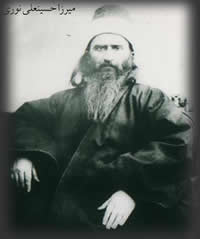
            • Bahá'u'lláh [aka: Mirza Husayn 'Ali Nuri] (1817–1864), born Shiite, adopting Bábism later in life, he claimed to be the promised one of all religions, and founded the Bahá'í Faith in 19th-century Persia. He claimed to be the prophetic fulfilment of Bábism, a 19th-century outgrowth of Shí‘ism, but in a broader sense claimed to be a messenger from God referring to the fulfilment of the eschatological expectations of Islam, Christianity, and other major religions.  Bahá'u'lláh was exiled for his teachings from Persia to the Ottoman Empire and died while officially still a prisoner.
            ~~~~~~~~~~~~~~~~~~~~~~~~~~~~~~~~~~~~~~~~~
              • Jacobina Mentz Maurer (1841 or 1842-1874) was a German-Brazilian woman who lived and died in the state of Rio Grande do Sul. She emerged as a messianic prophetess, and later declared the very reincarnation of Jesus Christ on earth by her German-speaking community called "Die Muckers"; her enemies referred to the cult as "Die Spotters". After a number of deadly confrontations with outsiders, Jacobina was shot to death together with many of her followers by the Brazilian Imperial Army. 
              ~~~~~~~~~~~~~~~~~~~~~~~~~~~~~~~~~~~~~~~~~
                  Image result for mirza ghulam ahmad
                • Mirza Ghulam Ahmad of Qadian, India (1835–1908), claimed to be the awaited Mahdi as well as (Second Coming) and likeness of Jesus the promised Messiah at the end of time, being the only person in Islamic history who claimed to be both. He claimed to be Jesus in the metaphorical sense; in character. He founded the Ahmadiyya Movement in 1889 envisioning it to be the rejuvenation of Islam, and claimed to be commissioned by God for the reformation of mankind. He declared that Jesus survived crucifixion and died a natural death having migrated towards the east. 
                ~~~~~~~~~~~~~~~~~~~~~~~~~~~~~~~~~~~~~~~~~
                  • Cyrus Reed Teed (October 18, 1839 - December 22, 1908) was a U.S. eclectic physician and alchemist turned religious leader and messiah. In 1869, claiming divine inspiration, Dr. Teed took on the name Koresh and proposed a new set of scientific and religious ideas he called Koreshanity. In the 1870s, he founded the Koreshan Unity, a commune whose rule of conduct was based on his teachings. After 1894 the group concentrated itself in the small Florida town of Estero, seeking to build a "New Jerusalem" in that locale, peaking at 250 residents during the first decade of the 20th Century. Following Teed's death late in 1908 the group went into decline, finally disappearing in 1961.
                  ~~~~~~~~~~~~~~~~~~~~~~~~~~~~~~~~~~~~~~~~~
                    • Father Divine (George Baker) (c/1880–September 10, 1965), an African American spiritual leader from about 1907 until his death who claimed to be God. Also known as Reverend Major Jealous Divine, this self-proclaimed prophet was also known as "the Messenger" early in his life. He founded the International Peace Mission movement, formulated its doctrine, and oversaw its growth from a small and predominantly black congregation into a multiracial and international church.
                    ~~~~~~~~~~~~~~~~~~~~~~~~~~~~~~~~~~~~~~~~~
                      • Samael Aun Weor (1917–1977), born Víctor Manuel Gómez Rodríguez, Colombian citizen and later Mexican, was an author, lecturer and founder of the 'Universal Christian Gnostic Movement', according to him, 'the most powerful movement ever founded'. Throughout his works there are hundreds of techniques and exercises that supposedly are of help in the development of psychic powers, for example leaving the dense physical body at will (astral projection). By 1972, he referenced that his death and resurrection would be occurring before 1978. Samael Aun Weor died on December 24, 1977.
                      ~~~~~~~~~~~~~~~~~~~~~~~~~~~~~~~~~~~~~~~~~
                        • Ahn Sahng-hong (1918–1985), founder of the World Mission Society Church of God and worshiped by the members as the messiah. He was a Korean Christian minister and first founded the Witnesses of Jesus Church of God. Shortly after his death in 1985 a schism took place dividing Witnesses of Jesus Church of God into two sects, New Covenant Passover Church of God and what is today known as World Mission Society Church of God. Both organizations claim him as their founder; New Covenant Passover Church of God regard Ahn as a teacher; World Mission Society Church of God regard Ahn as God.
                        ~~~~~~~~~~~~~~~~~~~~~~~~~~~~~~~~~~~~~~~~~
                          • Sun Myung Moon (1920–2012), founder and leader of the Unification Church established in Seoul, South Korea, who considered himself the Second Coming of Christ, but not Jesus himself. Although it is generally believed by Unification Church members ("Moonies") that he was the Messiah [and the Second Coming of Christ] and was anointed to fulfill Jesus' unfinished mission.

                          For a continuing list of Christian Messiah claimants, please visit... "Many will come in my name..." (Part 2)


                          Thursday, November 12, 2015

                          Religion vs. Science: Can They Co-Exist?

                          The following articles briefly touch on the debate between religion and science...

                          Pastor Carl Lentz says conflict between science and faith is a misconception

                          Pastor Carl Lentz
                          Pastor Carl Lentz says if people are secure in their faith, they'll be open to learning, hearing, and discovering.

                          Faith and science seem to be polar opposites of one another, but Hillsong NYC senior pastor Carl Lentz believes that there is no conflict at all between the two. Lentz recently appeared on Comedy Central's "The Nightly Show" together with renowned astrophysicist Neil deGrasse Tyson, according to the Gospel Herald.   

                          Tyson argued that it's hard to believe in the power of God when many calamities, disasters, and horrors are happening all over the world.   
                          "Anytime somebody talks about their understanding of God; typically it involves some statement of benevolence or some kindness. And I look up at the universe and yes, it is filled with mysteries. But it also filled with all manner of things that will just as soon have you dead, like asteroid strikes, hurricanes, tornadoes, tsunamis, volcanoes, disease, pestilence. There are things that exist in the natural world that don't have your health or longevity as a priority," Tyson said. "And so, I cannot look at the universe and say 'Yes, there is a God, and this God cares about my life.' The evidence does not support this," he added.
                          However, Lentz pointed out that God created science, and therefore Christians should not be fearful of it. 
                          "I think God created science, so, for me, I don't think that exploring any of this stuff is bad. I think it's going to lead you to acknowledge that something had to begin this, that there is something more. So I love it, I think that science is awesome. I don't think they are at war at all," he said.   
                          Lentz also could not understand why people feel threatened by science. When people are secure of their faith, Lentz said they will be open to learning, hearing, and discovering. "I think that's the essence of, at least, my religion," he said.

                          --------------------------------------

                          Can religion and science co-exist, or are these standards of belief ultimately irreconcilable?

                          Pastor Mark Brown & family
                          The question asks “Can religion and science co-exist, or are these standards of belief ultimately irreconcilable?” The answer is yes, they can co-exist. Albert Einstein once said “Science without religion is lame; religion without science is blind.”  

                          Scientific research and archeological discoveries supports biblical truths. The notion that science and religion are irreconcilable is centered on Charles Darwin’s book from 1859; The Origin of Species explaining the theory of evolution. Research all of the findings that compare biblical truths and you will find science supports them. Next time you run into a Scientist, as them if they believe there is intelligent life behind the universe. The majority will say yes. Science does contradict a literal interpretation of the first chapter of the first book of the bible regarding the origin of the universe. However, take into consideration that there is the letter of the law, the spirit of the law, literal and allegorical methods of interpretation. I know that is deep but let me say this, the earth is too perfect for it to have been created by anything or anyone other than God.

                          The bible clarifies why, who, and when. Take for instance the earth and where it stands. The earth is 93,000 miles from the sun. Too close and we would be consumed. Too far and we would freeze. What about the axis of the earth? It is tilted at a perfect 23 degree angel that allows equal global distribution to the rays of the sun making it possible for the food chain to exist. You see God created raw material for us to use. God perfectly aligned the cosmos as we know it.

                          In fact, the bible tells us there is nothing hidden that would not be made known and nothing new under the sun. It’s always been there. Jesus said, “I have come that we may have life and life more abundantly.” That means enjoying the creation of the Creator. God never makes a mistake. What He creates is always a masterpiece. Mass and matter do not limit God Almighty. That is why nothing is impossible for God to do in our lives. He still heals, reveals, brings peace, releases favor, and creates opportunities. Why? Because with Him nothing is impossible. Science reaffirms there is a God. It tells us something or someone created the world and the universe. Don’t put God in a box by not knowing who, what, and why. The “who” is God, the “what” is His voice, the “why” is so mankind could have the opportunity to worship and enjoy the living God. 

                          Blessings,

                          Pastor Mark Brown
                          --------------------------------------

                          5 facts about the interplay between religion and science

                          From the heresy trial of Italian astronomer Galileo Galilei four centuries ago to the uproar over Charles Darwin’s theory of evolution, religion and science have often been seen as being in conflict. But are religious faith and the scientific enterprise really at odds with each other?

                          A new Pew Research Center survey examines this question through the lens of American public opinion and across a range of scientific topics. We found that a majority of Americans (59%) say that science is often in conflict with religion, with only 38% saying the two areas are mostly compatible. Here are five key findings from the report:

                          1) The least religiously observant Americans are most likely to perceive conflict between religion and science. Some 73% of adults who seldom or never attend religious services say science and religion are often in conflict, while half of adults who attend religious services at least weekly say the same.

                          2) Most American adults (68%) say there is no conflict between theirpersonal religious beliefs and science. For the 30% who do see a conflict, the most common source of disagreement involves beliefs about evolution and the creation of the universe. Indeed, among those who say that science and their own religious beliefs are in conflict, 36% cite evolution and/or the creation of the universe as the primary source of the discord – more than any other answer to the open-ended question.

                          3) Two-thirds of Americans (65%) believe that humans evolved over time. About a third of U.S. adults (35%) say that humans evolved through natural processes, while about a quarter (24%) say that human evolution has occurred with the guidance of “a supreme being.” About a third of adults (31%) say that humans did not evolve but have always existed in their present form; white evangelical Protestants (60%) are more likely than those in other major religious groups to hold this view. White evangelical Protestants also are more likely than others to say that there is not a scientific consensus on human evolution (49%).

                          4) The public is closely divided about whether churches and other houses of worship should be involved in science policy debates, such as climate change. Half of U.S. adults say churches should express their views on scientific policy issues, while 46% say they should not do so. Most white evangelical Protestants (69%) and black Protestants (66%) say churches should express their views. But a majority (66%) of those who are unaffiliated with any religion disagree, saying that churches should keep out of such matters. Catholics, like the public as a whole, are divided on this question, with 45% saying churches should express their views on scientific policy issues and 49% saying they should not do so.

                          5) People’s religious differences do not play a central role in explaining their beliefs on a number of science-related topics – ranging from views about climate change to the safety of genetically modified foods. One exception is human genetic modification, where religious observance is tied to public opinion. For example, 61% of U.S. adults who attend worship services at least weekly, regardless of their particular religious tradition, say genetic modification to reduce a baby’s risk of serious diseases would be “taking medical advances too far.” By comparison, among adults who seldom or never attend worship services, 41% say genetic modification for this purpose would be taking advances too far.


                          Monday, November 2, 2015

                          The Prophet Habakkuk


                          The Prophet Habakkuk was one of the 12 Minor Prophets mentioned in the Ketuvim/Old Testament and prophesied in the Kingdom of Judah during the reign of Jehoiakim. Little is known about this elusive prophet of old; he is only mentioned in the tome named for him in the Holy Books (Habakkuk 1:1 and 3:1). Unlike his contemporaries, no personal information regarding Habakkuk is detailed in the Bible other than his title, "the prophet".

                          Ancient Chaldean Empire c/600 B.C.
                          Habakkuk was noted for his prophecies of God's retribution against them by the Chaldeans. The prophet also predicted the Chaldean downfall.
                                 
                          Scholars speculate and conclude that Habakkuk was residing in Jerusalem during the time he wrote his prophecy. It is believed that he flourished with future insights between 615-590 B.C.

                          According to biblical account, the Book of Habakkuk consisted of five (5) predictions about the Chaldeans and their rise to power around 612 B.C.; some theologians and scholars assume Habakkuk was a contemporary of Jeremiah and Zephaniah. Over many centuries, considerable conjecture has been presented, mostly in the form of Christian and Rabbinic tradition, but the modern scholars of our 21st century dismiss such accounts by claiming they are speculative and unsubstantiated.  

                          Regardless of this prophet's elusiveness, according to the Zohar (Volume 1, page 8b) Habakkuk is the boy born to the Shunamite woman through Elisha's blessing in 2 Kings 4: 16, but according to 2 Kings 4:18-20, this child dies. So was there another seer called Habakkuk? He is also mentioned in Lives of the Prophets, which notes his time in Babylon. According to this apocryphal book, Habakkuk is said to be from the land of Bethzuchar and of the Tribe of Simeon. Not long after the fall of Jerusalem, he went to live in the land of Ishmael. Much later he was a part of the Babylonia captivity where he met the Prophet Daniel. Habakkuk was purported to die two years before the end of the captivity and was buried "in his land".  

                          Per Wikipedia, Habakkuk appears in Bel and the Dragon, which is part of the Additions to Daniel found in Catholicism's Biblical apocrypha. Chapter 1:33–39 states that Habakkuk is in Judea and after making some stew, he's told by the angel of the Lord to take the stew to Daniel, who is imprisoned in Babylon in the lion's den. After proclaiming he is unaware of both the den and Babylon, the angel transports Habakkuk to the lion's den. Habakkuk gives Daniel the food to sustain him, and is immediately taken back to "his own place".

                          Even the purposed burial place of Habakkuk is in question and his final resting place is claimed to be in various different locations, such as:

                          1. Sozomen, a 5th century B.C. Christian historian, claimed that the relics of the prophet were found at Cela. According to this antediluvian scholar, God revealed the location of Habakkuk's tomb to Zebennus, bishop of Eleutheropolis, in a dream. 
                          2. The burial place of Habakkuk is identified by Jewish tradition as a hillside in the Upper Galilee region of northern Israel, close to the villages Kadarim and Hukok, about six miles southwest of Safed and twelve miles north of Mount Tabor. A small stone building, erected during the 20th century, protects the tomb. Tradition dating as early as the 12th century AD holds that Habakkuk's tomb is at this location.  
                          3. Islamic tradition claims the tomb may be in Yaquq, a name related to the biblical place known as "Hukkok" (mentioned in Joshua 19:34). Archaeological findings in this area include several burial places dated to the Second Temple period (during the Babylonia captivity).  
                          4. In western Iran, a mausoleum southeast of Tuyserkan is also believed to be the prophet's burial location. Habakkuk was believed to be a guardian to the Temple of Solomon, and that he was captured by the Babylonians and remained in their prison for some years. After being freed by Cyrus the Great, he went to Ecbatana and remained there until he died, and was buried somewhere nearby, in what is today Tuyserkan.
                          The Book of Habakkuk consists of three chapters and the book is neatly divided into three different genres: 1) A discussion between God and Habakkuk. 2) Predictions of Woe for the Chaldeans, and 3) A Psalm (or Song).

                          Because the final chapter of the ancient prophet's book is a song, it is sometimes assumed by some theologians that he was a member of the Tribe of Levi, which served as musicians in Solomon's Temple.

                          While there is no biographical information on Habakkuk and less is known about him than any other writer of the Bible, he is one of the most unique among the Minor Prophets. He was the only known prophet to openly question the working of God when it came to the injustice of his people. Habakkuk questioned the Great Creator, stating:
                          "O Lord, how long shall I cry, and thou wilt not hear! even cry out unto thee of violence, and thou wilt not save! Why dost thou shew me iniquity, and cause me to behold grievance? for spoiling and violence are before me: and there are that raise up strife and contention. Therefore the law is slacked, and judgment doth never go forth: for the wicked doth compass about the righteous; therefore wrong judgment proceedeth." Habakkuk 1:2-4
                          It is interesting to note that while Habakkuk's name is not mentioned anywhere in the Christian Bible except for the book named after him, Paul the Apostle did quote the ancient prophet in Romans 1:17, Galatians 3:11 and Hebrews 10:37-38. Habukkuk's vision was tied to Jesus and used to comfort the Church during a period of persecution. These three epistles (Romans, Galatians, and Hebrews) are considered to be "the three great doctrinal books of the New Testament", and the mysterious prophet's statement concerning faith forms the backbone of each canon.  

                          To sum up this enigmatic seer, Habukkuk only identifies himself as a prophet and the major theme of his book is trying to grow from a faith of perplexity and doubt to the height of absolute trust in God.
                          "Thou art of purer eyes than to behold evil, and canst not look on iniquity: wherefore lookest thou upon them that deal treacherously, and holdest thy tongue when the wicked devoureth the man that is more righteous than he?" ~ Habukkuk 1:13